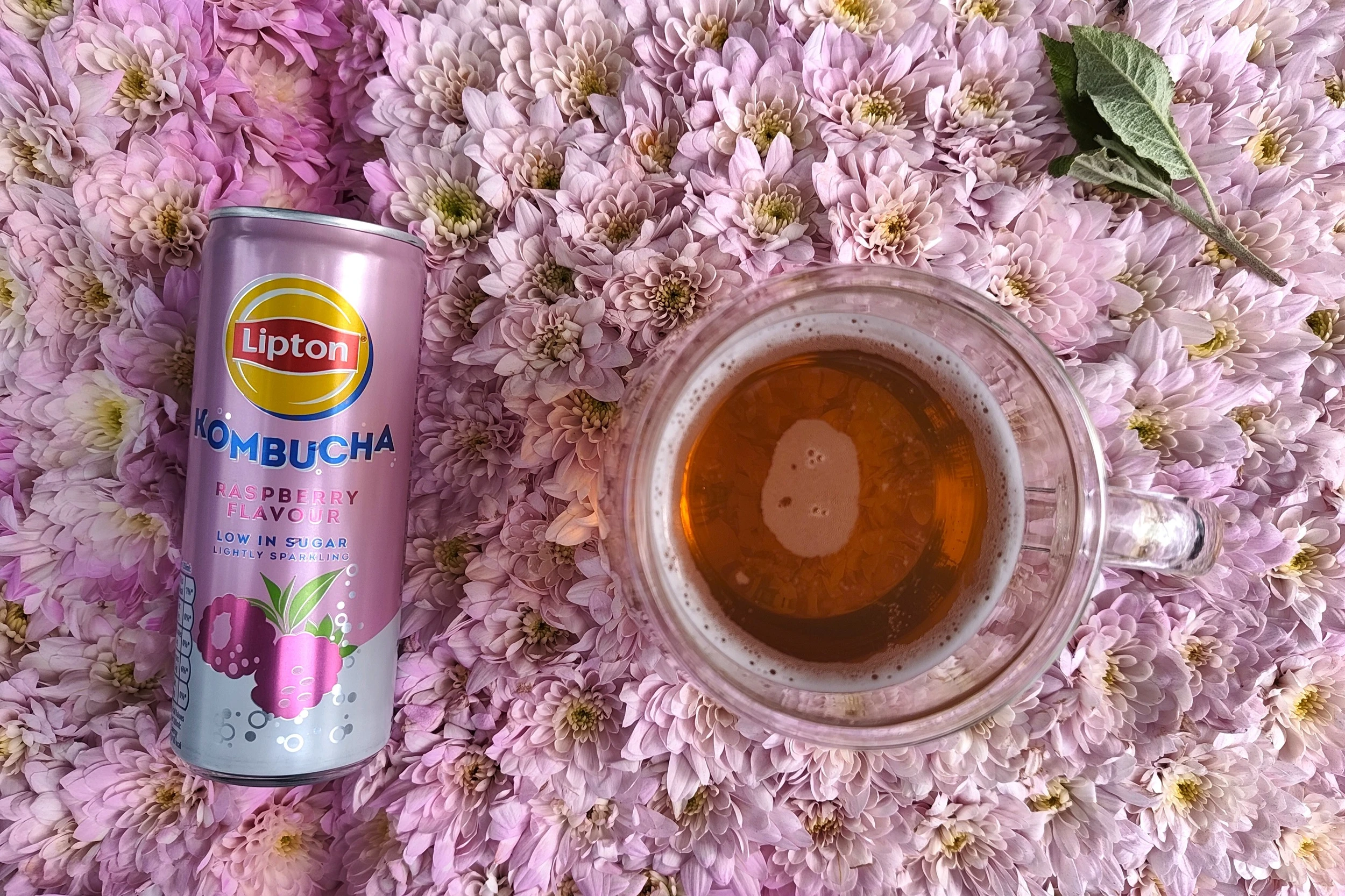

Raspberry has to be one of the best kombucha flavours – it’s tart and sweet, which is just what you need with the sour tang of fermented tea. I spotted a pack of Lipton Raspberry Kombucha on the shelves of my supermarket and couldn’t resist taking them home to try.
I’ve been burned by Lipton before. Their teabags were atrocious and scored very poorly here on the Immortal Wordsmith blog. However, their ready-to-drink iced teas are always delicious and highly popular, so I am willing to give the brand the benefit of the doubt and embrace this kombucha with open arms.
In my full kombucha review, I’ll explain what this beverage tastes like, what ingredients are used to make it, and whether it is worth your hard-earned money.
Lipton Raspberry Kombucha at a Glance
Izzy’s Rating
- Ingredients: Carbonated water, sugar, vinegar, flavourings and “kombucha powder”
- Flavour: Raspberry soft drink with high acidity
This is a sparkling raspberry soft drink with a touch of kombucha-like sourness. It is predominantly sweet and fruity. Just like their iced tea range, it’s very tasty to drink… but doesn’t have any real tea flavour coming through.
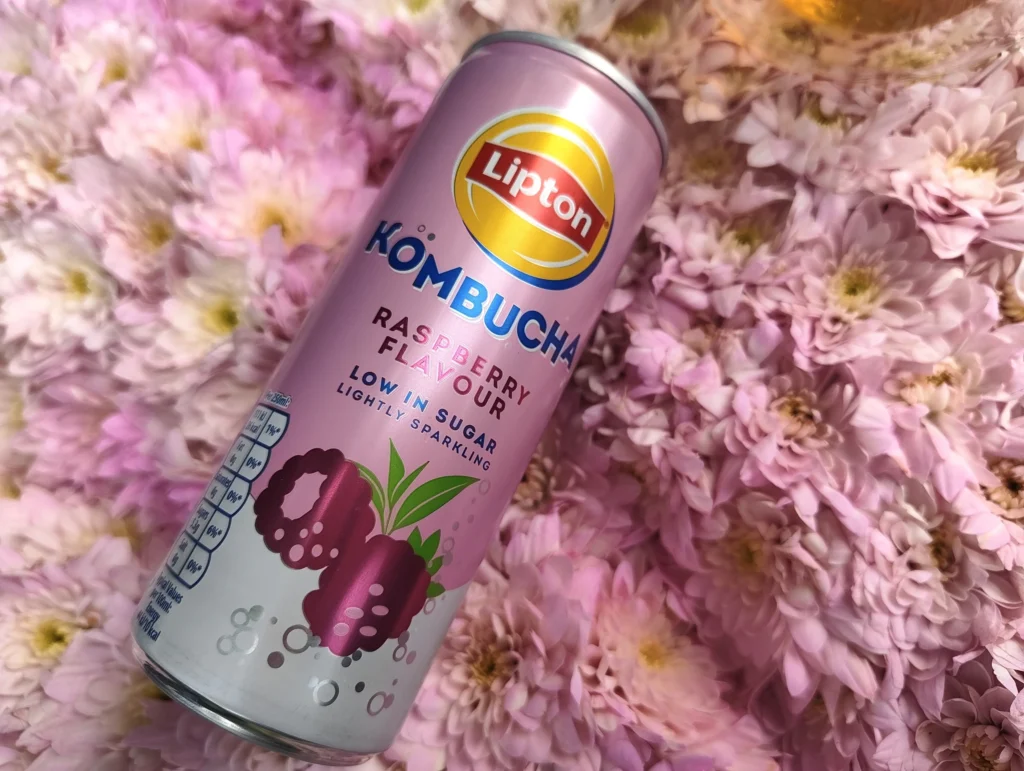
Full Review – Kombucha Raspberry Canned Soft Drink
- Type: Canned, ready to drink
- Tea: Kombucha powder (maltodextrin, kombucha fermented black tea)
- Additives: Sugar, cider vinegar, malic acid, citric acid, black tea extract, natural flavourings, stevia, ascorbic acid, living cultures (Bacillus Coagulans)
- Flavour Notes: Fruit tang, intense sweetness, fake raspberry
- Aroma: Very sweet, fake raspberry, fruit juice from concentrate
- Where to Buy: Amazon or UK supermarkets
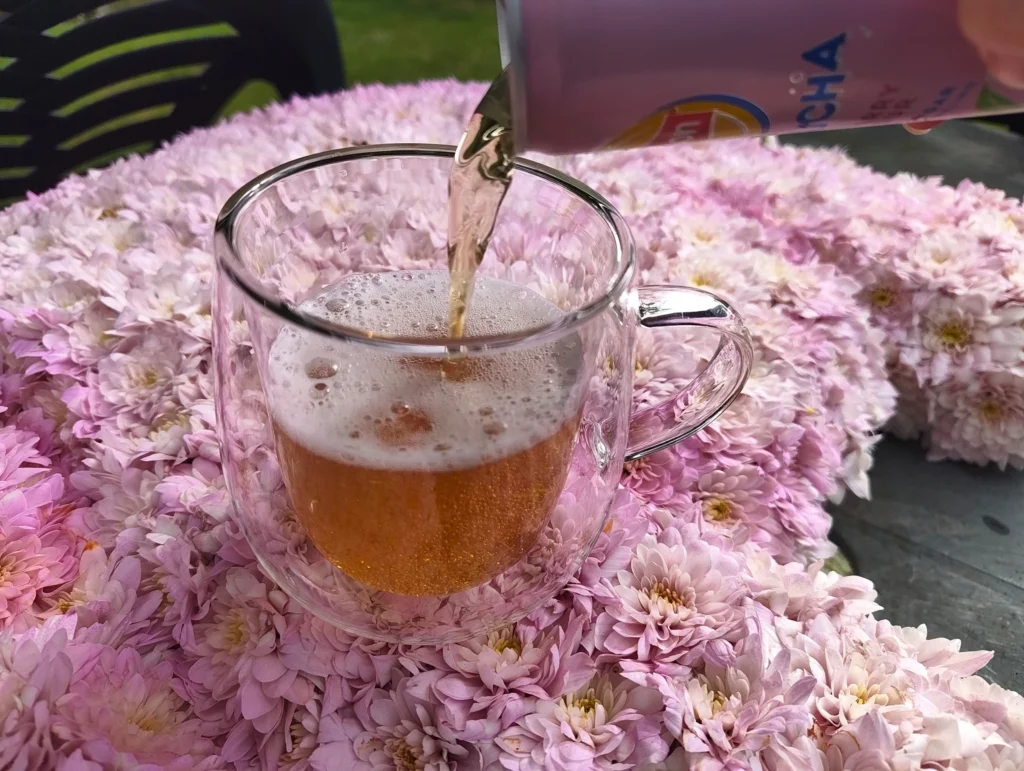
The aroma is instantly very very sweet with fake raspberry notes. It’s just sugary fruit juice from concentrate without any of the acidity or tang that kombucha is known for. I didn’t need to see the ingredients to know that there’s no real kombucha in this can.
I’ve had kombuchas strip the hairs out of my nose when they’re super strong. Lipton Kombucha is at the other end of the spectrum.
As for the flavour, it does hit you with tang, but it’s more of a fruit tanginess than a sour fermented tanginess. It sweeps over your tongue and then is lost in a tsunami of sugary sweetness. The raspberry notes are subtle and not overly genuine.
If you are a kombucha fan, you will be sorely disappointed. Lipton Raspberry Kombucha tastes like a watered-down, imitation kombucha. It’s like if you described kombucha to someone and they made the drink without realising just how punchy good kombucha can be.
In fact, I’d go so far as to say that this beverage will only be super popular with people who don’t really like kombucha. So why did Lipton even make it? To stay up to date with beverage market trends? To give non-tea drinkers a way to look cool without acquiring a taste for good ‘booch?
Is This Real Kombucha?
The ingredients on my can, word for word, are:
Carbonated Water, Sugar, Kombucha Powder 0.2% (Maltodextrin, Kombucha Fermented Black Tea), Cider Vinegar, Acids (Malic Acid, Citric Acid), Black Tea Extract 0.12%, Natural Flavourings, Sweetener (Steviol Glycosides from Stevia), Antioxidant (Ascorbic Acid), Living Cultures (Bacillus Coagulans).
Yes, you read that right. The kombucha element makes up 0.2% of the entire beverage – and we don’t even know how much of that 0.2% is kombucha and how much is maltodextrin. I get the impression (and this is pure speculation) that the 0.2% kombucha was only added so they could legally put the word ‘Kombucha’ on the can.
To give it that tang, Lipton is relying on the cider vinegar and possibly the acids (though I believe they are probably there to improve the shelf life).
The living cultures are shelf-stable probiotics – they have nothing to do with the kombucha fermentation process. I find this a little misleading too.
In contrast, real kombucha is made by fermenting sweetened tea with live bacteria and yeast for 7 days up to a month. The fermentation process uses up almost all of the sugar and creates that incredible sour tang. Real kombucha has some impressive benefits for your gut too.
If you want the best kombucha, you can actually make it at home. This guide explains the science and includes a recipe. However, if you want a ready-to-drink kombucha that’s the real stuff without the wait, Remedy is pretty good.

About Lipton’s New Kombucha Range
Lipton Kombucha is marketed as a healthy soft beverage. The words “low in sugar” and “low in calories” are plastered all over the marketing material, with “naturally fermented tea” added on too. But as I’ve explained, the kombucha element is minimal.
Perhaps the kombucha powder was indeed made from naturally fermented tea, but that’s not really why the words are on the can. It’s because you see words like “naturally” and “fermented” and jump to conclusions about the nutritional benefits.
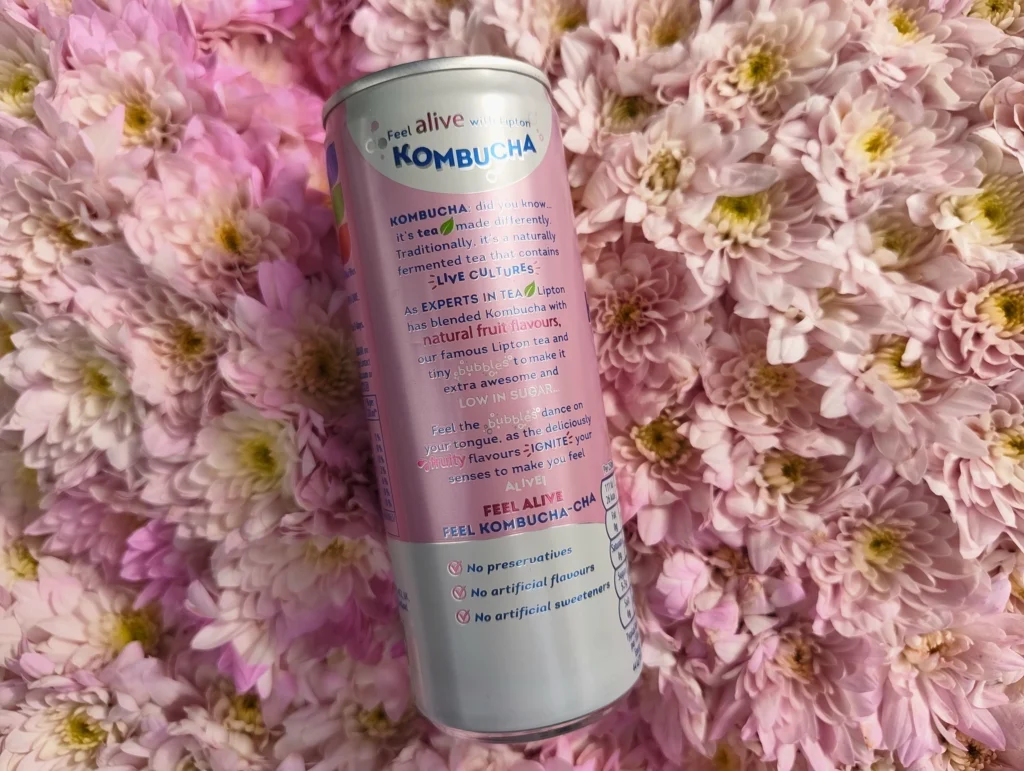
This is the description on the can, worded extremely carefully:
Kombucha: did you know… it’s tea made differently. Traditionally, it’s a naturally fermented tea that contains live cultures.
As experts in tea, Lipon has blended Kombucha with natural fruit flavours, our famous Lipton tea, and tiny bubbles to make it extra awesome and low in sugar…
Notice how they don’t say that their beverage is made like traditional kombucha?
They certainly fooled me when I picked it up on the supermarket shelves. But in reality, when you look at the ingredient’s list, there’s very little that’s natural about this tea. Sure, the individual components might come from natural sources, but they’re put together to mimic the flavour of kombucha… which honestly feels like a bit of a scam when it is totally possible to sell real kombucha in UK supermarkets.
Summary
I’ve ranted about the authenticity of this kombucha (and I could probably write another entire article about it) but the bottom line is this: Lipton Raspberry Kombucha is a tasty, flavoursome beverage.
There’s absolutely nothing wrong with the flavours… it’s just the marketing that is a little too sly for my tastes. With both aspects taken into consideration, I’ve scored it a respectable 2.1 out of 5.
Tea Recommendation
I mentioned Lipton teabags being a huge mistake, but thankfully, there are plenty of other brands to choose from if you want a hot beverage. Yogi Tea has even made a Green Tea Kombucha teabag that got a surprisingly high score from me! Read that review next.