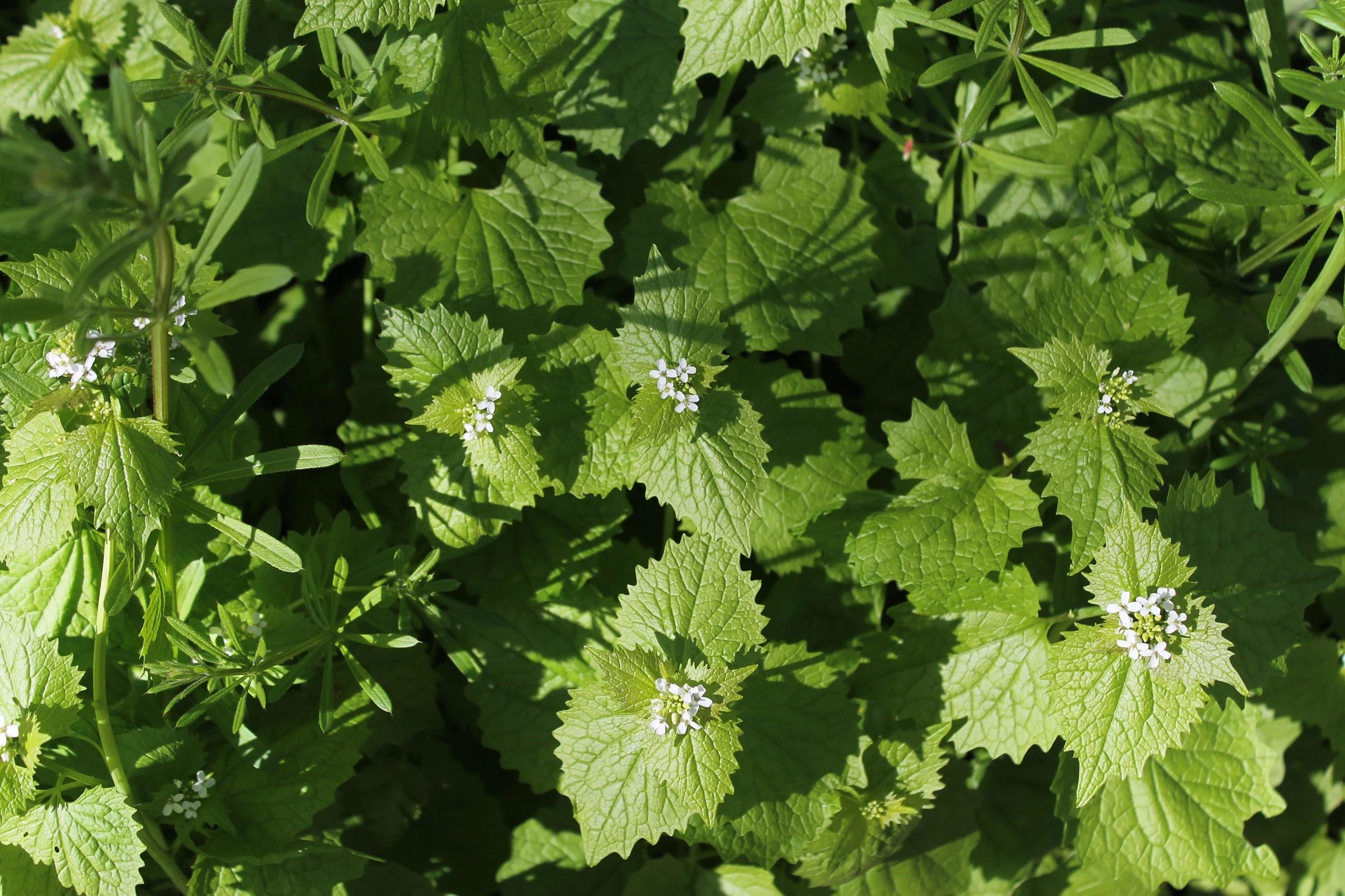

Without a doubt, garlic mustard is my favourite free ingredient to forage in the UK. As the name suggests, it is a pungent and flavoursome ingredient with strong notes of garlic and mustard that’s ideal for salads and sauces. It works particularly well with fish but I love to eat it with chicken too.
Garlic mustard (Alliaria petiolata) is native to Europe and the UK but invasive in the Americas. It’s easy to spot and identify from early spring and will continue growing for several months, so there’s no rush.
This ingredient has been growing in the UK and harvested as a food source for over 6,000 years!
Read my full foraging guide to find out how to safely forage garlic mustard, when to look out for it, what parts of the plant you can use, and how to cook with it.
Guide to Identifying and Foraging Garlic Mustard
- Best Time: March to June
- Abundance: High
- Foraging Level: Easy
- Uses: Herb, salad leaf, spice
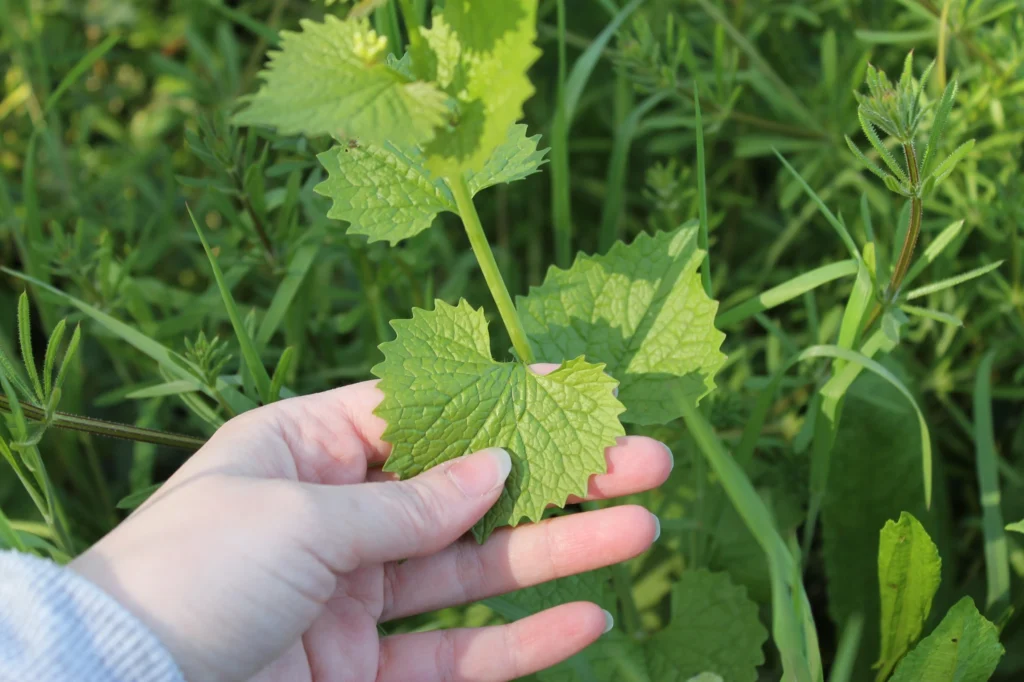
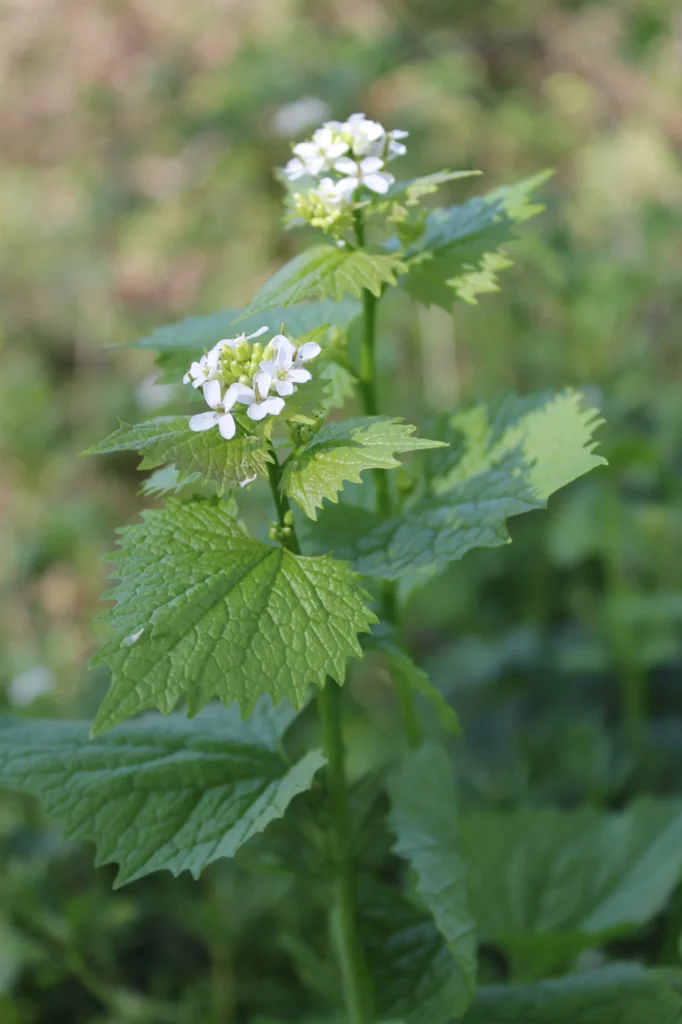
Garlic mustard is also known as jack-by-the-hedge and that’s exactly where it grows. You can find the plant growing from spring to early summer in shady spots alongside footpaths, in wooded areas, and of course, under hedges.
You can identify it visually by looking for:
- Pale green stems, slightly hairy at the base
- Heart-shaped leaves with deep scallops around the edges
- Small white flowers growing in a cluster at the top (only occurs once every other year)
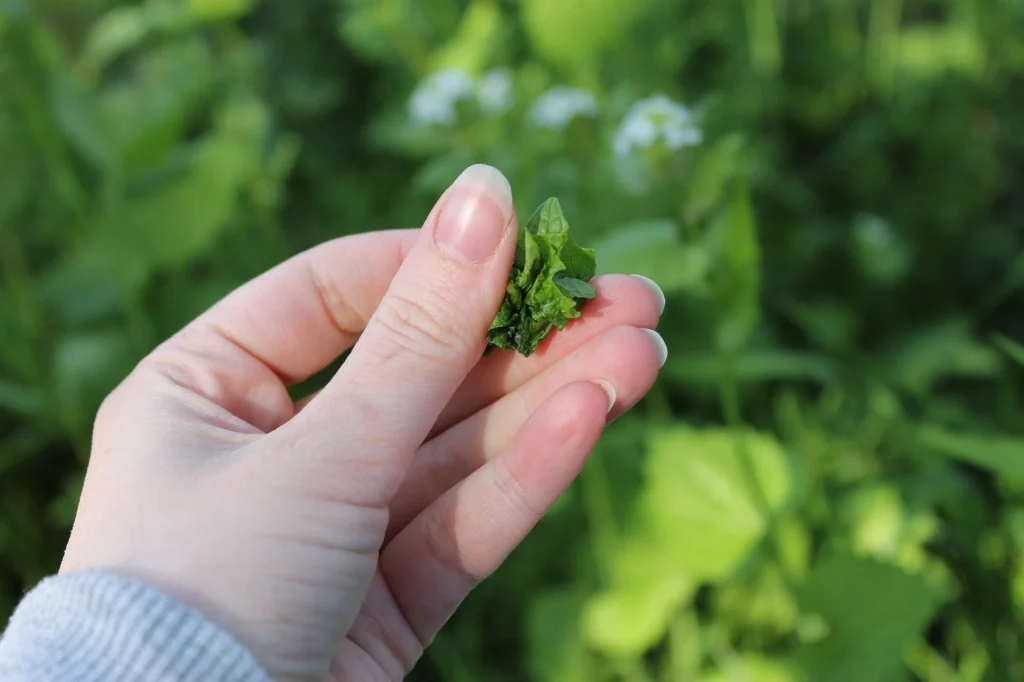
However, it’s the smell of this plant that is the dead giveaway. Pluck off one leaf and crush it in your hand – you should smell the garlic scent instantly.
The entire plant is edible, but the leaves are the best and most versatile. Pick the young leaves in March and April to make salad or use as herbs, or wait for larger leaves to grow in June so you can wilt them like spinach or roll and stuff them like cabbage.
💡 Foraging tip: in the UK, you need permission from the land owner (often the council if not a private owner) to dig up the roots due to the Wildlife and Countryside Act 1981. If you do get permission, the roots are entirely edible and have a wonderfully spicy flavour.
As always, leave plenty of garlic mustard plants alone when you are foraging. As a general rule, take no more than one third of the leaves of a single plant. Garlic mustard plants produce seeds later in the year, so leave plenty to go to seed. Not only does this give you a source of wild garlic mustard seeds (delicious too) but it ensures the plant will continue to grow and spread for years to come.
Garlic Mustard Leaves
- Flavour: Mild garlic and mustard, slightly bitter
- Uses: Pesto, fish sauce, salad leaf, herb
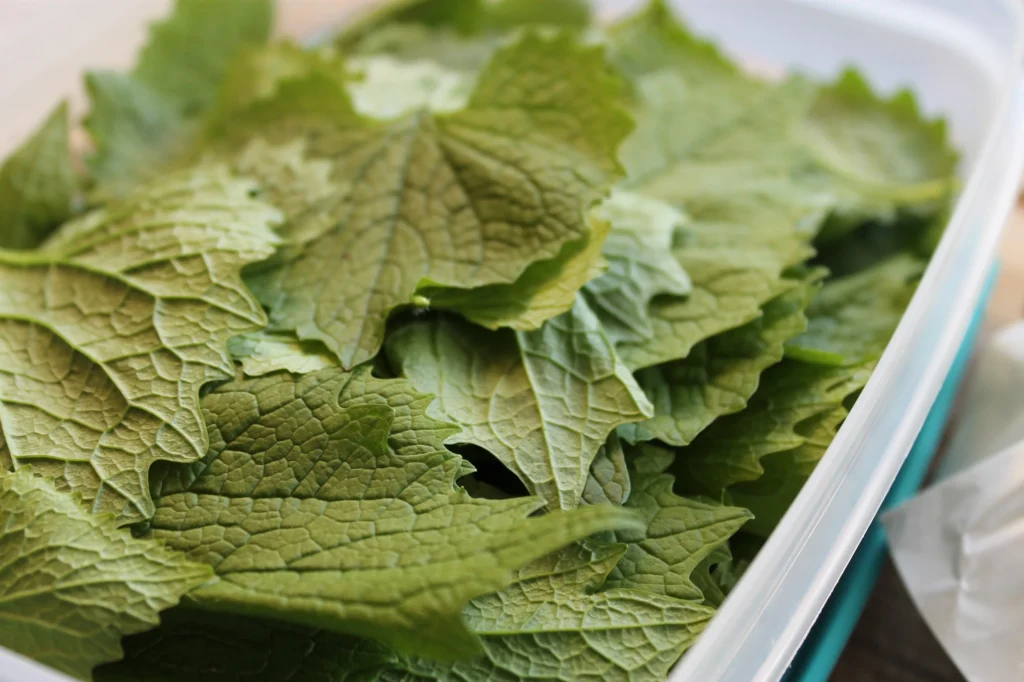
Garlic mustard plants have small leaves at the top and large ones at the bottom. The younger, smaller leaves have a fresher garlic-mustard flavour, while the larger leaves can have a slight bitterness (particularly late in the season).
To harvest them, simply pluck a few off the plant or use scissors. Store them in a sealed tupperware box in the fridge. They are essentially salad leaves, so expect them to last about as long as a bag of ready-to-eat salad mix would.
Don’t worry if you pluck a few top shoots off the plant. Not only are the flowers and flower buds edible, but the shoots themselves have a fantastic flavour and are ideal for stir fries.
Nutrition-wise, garlic mustard leaves are a source of vitamins A and C.
Garlic mustard contains trace amounts of cyanide too, which sounds alarming but isn’t. The quantities are too small to cause harm in normal food portions, and chopping or cooking the leaves eliminates it within minutes.
Recipes
Garlic mustard leaf recipes generally fall into three categories; salad leaf or spinach substitute, herb substitute, cabbage or grape leaf substitute.
Popular recipes include:
- Pesto
- Leafy salads
- Stir fries
- Sauce for fish
You can use it like parsley to garnish recipes or stir through sauces. Try mixing some in your mashed potatoes or using it to cook garlic mushrooms too.
The larger leaves can be treated like cabbage. Wilt them into soups, stuff them, or simply blanch and serve with your meal.
💡 Cooking tip: unlike real garlic and mustard, the flavour of the leaves does not intensify as you cook it. The flavour fades rapidly when you introduce heat, so always add your garlic mustard leaves for the end of the recipe if possible.
Wild Garlic Mustard Seeds
- Flavour: Spicy pepper
- Uses: Seasoning
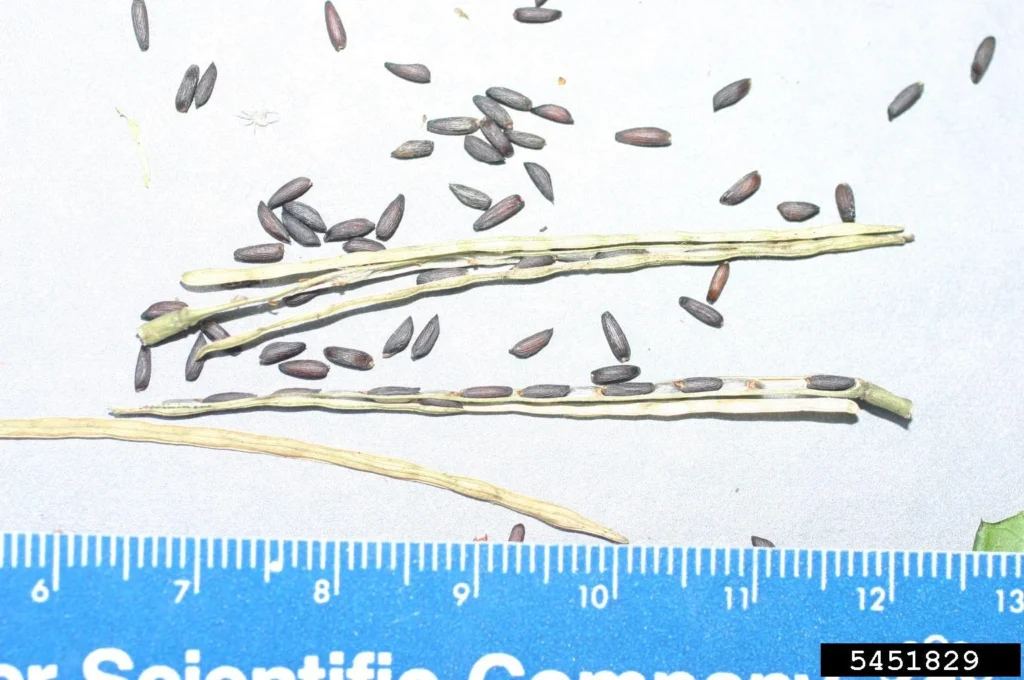
The garlic mustard plant typically goes to seed from June onwards, once the flowers have finished blooming. They produce small black seeds in thin pods that are easy to spot and harvest – simply collect them from the plant.
Remember to leave plenty of seeds on the plants and even scatter them around the area. This encourages more plants to grow and replenishes the ecosystem after your foraging.
The seeds have a spicy, peppery flavour that can be used as a seasoning. If you are short on black pepper or mustard seeds, they make a fabulous substitute.
Recipes
Aside from eating the seeds fresh by sprinkling them on meals like a garnish, you can choose to:
- Dry the seeds and store them. They can be ground up like black pepper too.
- Sprout the seeds. Like chia seeds, if you put them on some moist kitchen paper or sow them on your windowsill, you can harvest the sprouts like tiny peppery cress.
Britain’s 6,000-Year-Old Free Ingredient
Folk names for garlic mustard include jack-by-the-hedge, sauce-alone, and poor man’s mustard. Historically in the UK it was used to create a sauce for fish dishes. The flavour is so good with fish that little else is needed – hence the name ‘sauce-alone.’
Garlic mustard has been used in Europe as a herb for 6,000+ years (or at least, that’s as far back as the earliest record is).
The plant’s historic medicinal uses are all tied to cleansing. It was once used as a disinfectant and a poultice can be made of the roots and leaves to cleanse wounds.
Garlic mustard is one of those ingredients that makes you wonder why we ever started paying for herbs at all. Try it fresh to start and let me know how you get on in the comments.