Learning how to make a quilt as a beginner can feel overwhelming, but it doesn’t need to be. I’m a modern quilter who loves bold colours and artistic designs – no beige granny quilts here! In this beginner quilting guide, I’ll show you that quilting is simply sewing one piece of fabric to another. Anyone can do it.
If you’re wondering what you need to make a quilt and how to get started with your first quilting project, this simple guide will walk you through the basics.
How to Make a Quilt for Beginners
A big thing that stands in the way when you want to start quilting… is yourself. A quilt is not a small crafts project. It requires planning, time, and money.
But don’t forget this one thing.
Quilting is just sewing one piece of fabric to another. Anyone can do it.
Once you understand the basic quilt making process, you’ll wonder why you ever found it intimidating.
Here’s the gist of it all.
- Sew small pieces of fabric together to make one large piece,
- Choose another single large piece of fabric,
- Choose a padding material,
- Layer the padding between the two fabric pieces,
- Sew all three layers (the quilt sandwich) together,
- Sew a strip of fabric around the edge to hide the stitching and padding.
And that is it.
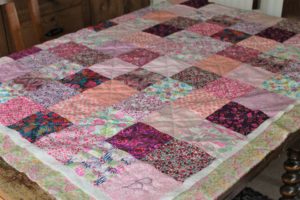
Of course, as a total beginner to quilting, I recommend you start with an extremely simple design. Below is a picture of my first quilt. As you can see, I chose simple squares (the easiest shape to quilt with) that are quite large.
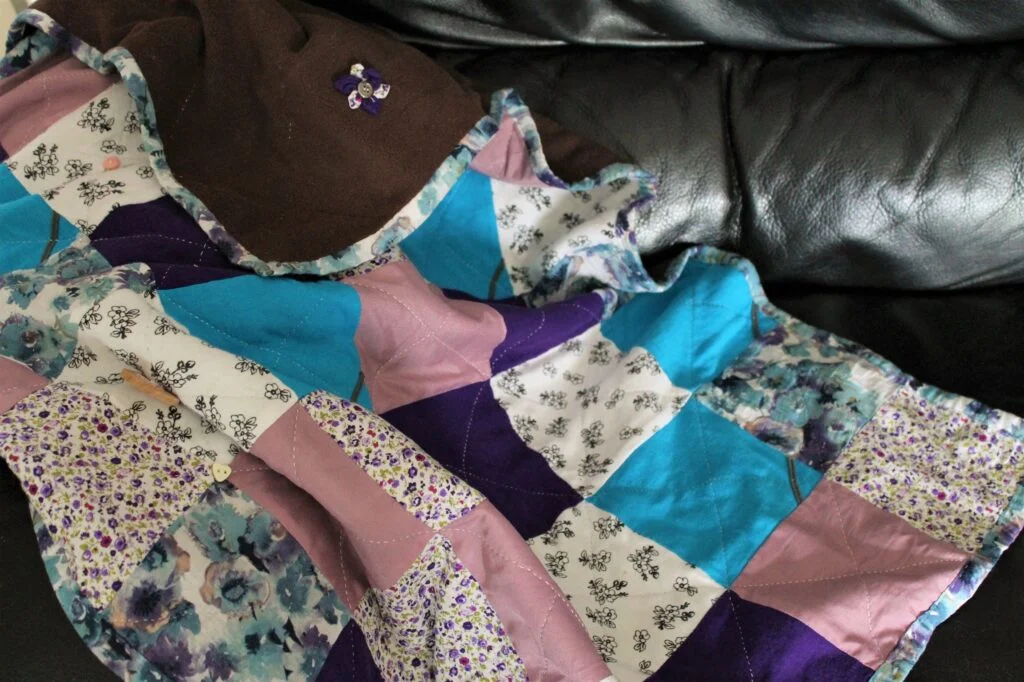
I also skipped the padding – I choose a nice fleece material for the backing instead. This made it even simpler and allowed me to practice the act of quilting without worrying about padding.
One final thing that you should know is that ‘quilting’ refers to stitching the three layers together. You sew the small pieces of fabric together, but you quilt the three layers together. Make sense? Great.
The Quilting Basics
First things first, when making a quilt you need a plan. You need to know how big your quilt will be and what design will be on the front. Even if you plan to do a “crazy quilt” where you build it up as you go, you still need to know how much material to buy.
You’ll want to think about colour combinations and the purpose of the quilt as well. Is it for a crib? Is it for a bed? The final quilt size needs to be determined first.
Also, don’t forget that you need to calculate in seams. When you sew one piece of material to another, there is an overlap, so the final fabric piece is slightly smaller. When you sew together lots of little pieces, it really adds up.
To do this, I recommend you search through Pinterest. Find a quilt design you like and buy the pattern. You can make up your own pattern, but that might be frustrating as a beginner.
Oh, and don’t worry about messing things up. You can unpick your stitches and start again whenever you want. It’s like writing in pencil – you can fix your mistakes!
Things You Need for Quilt Making
If you’re wondering what you need to make a quilt, the good news is you can start with items you probably already have at home. Here’s everything from the bare minimum to professional-level supplies:
- Fabric – that’s unavoidable.
- Cutting tool – scissors will do.
- Thread – to sew with.
- Needle – to do the sewing.
- Fixing tool – pins work.
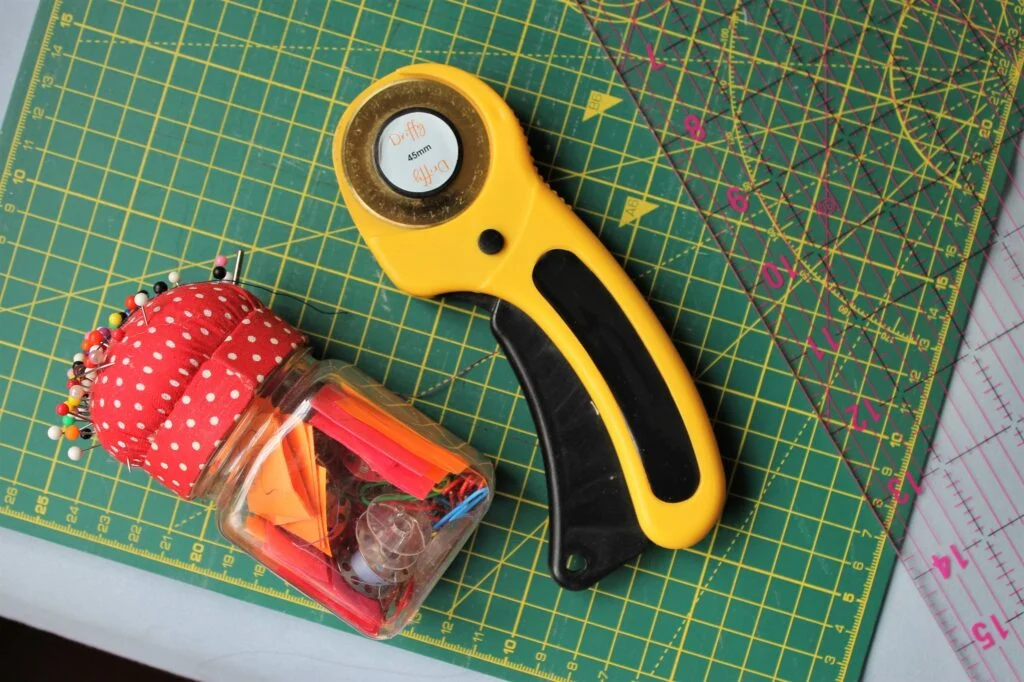
Those are the basic things you need to make a quilt. If you are serious about quilting and want to spend some money on tools, try these extras. I’ve added links to my preferred brands on Amazon UK:
- Quilting fabric – it’s designed to be thicker and easy to sew with.
- Padding – makes your quilt cosy. I always choose cotton.
- Rotary cutter – way more precise and faster than scissors. You can use kitchen foil to sharpen the blades when they dull.
- Cutting mat – you will need to use this with the rotary cutter.
- Quilting ruler – allows you to measure large pieces of fabric.
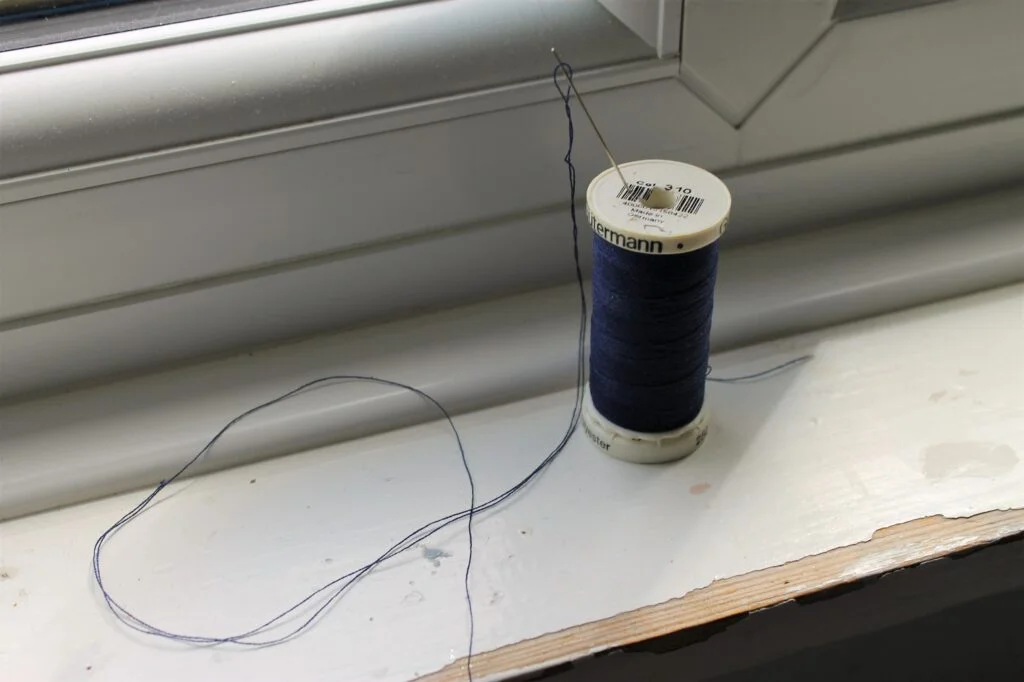
- Quilting thread – specifically designed thread that’s easy to sew with and won’t tangle. Gutermann is the most reliable brand I’ve found for thread.
- Sewing machine – a basic one will do.
- Temporary fabric glue – works better than pins.
- Erasable fabric pens – so you can draw on the lines you need to quilt (way neater this way). They erase with water or heat – I use a hair dryer!
Quilting: How to Follow A Guide
I find the easiest way to make a quilt as a beginner is to follow a guide. That means you don’t need to do the math and work out the seams. You don’t need to calculate how much fabric to buy. And you won’t get caught out when you realise the design doesn’t quite all fit together.
Read my guide to creating a simple quilt (part 1 of 3) for an example. It’s so much easier when you don’t need to worry about seams matching and not having enough fabric.
The Best Books for Sewing a Quilt
As a beginner, there were two books that I relied on for my guidance.
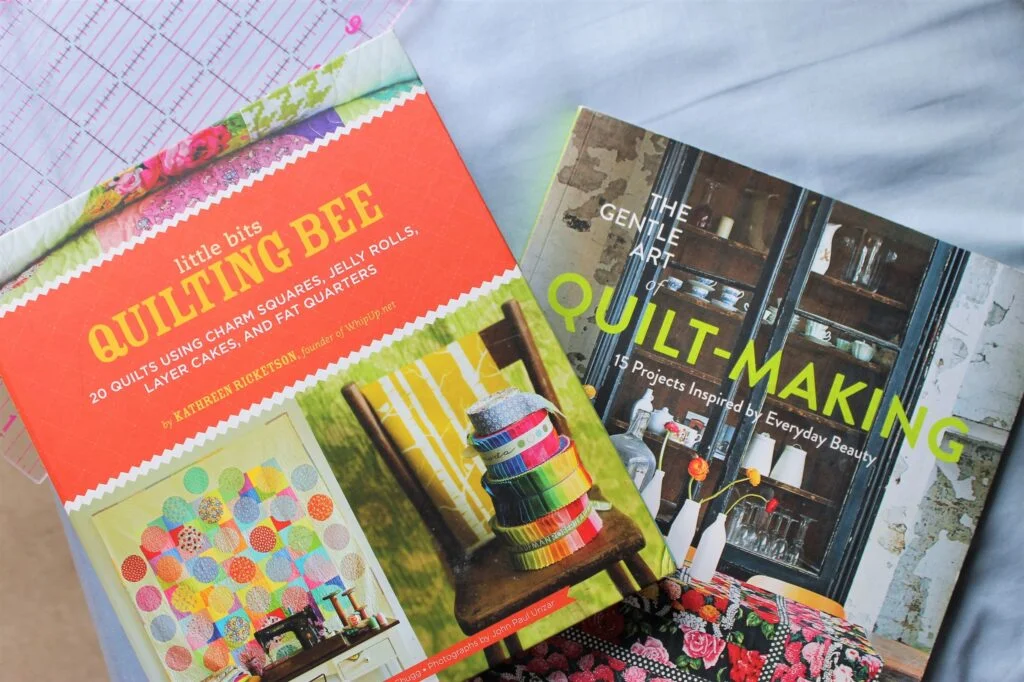
The Gentle Art of Quilt Making, by Jane Brocket
This book (available on Amazon) contains 15 very simple designs, but they are truly amazing. Jane Brocket shows you that fabric choice is everything. With the right theme and colour combination, even a simple square patchwork quilt is stunning.
The instructions are really straightforward too.
Little Bits Quilting Bee, by Ricketson
I really like this book too (available on Amazon UK) because it has a really long section at the front of the book where it takes you through all the little things. It assumes that you know nothing about sewing or quilting, so it is really good if you are clueless. Personally, I don’t like the designs in the book, but that helpful intro is worth buying it regardless.
How to Do Quilting – Two Methods
I mentioned above that “quilting” actually refers to the action of sewing your three pieces of the quilt sandwich together – the lovely front piece you created, the padding, and the backing.
For a long time, I thought that I couldn’t make a quilt without a sewing machine that had a specific function for it. That’s just not true.
Hand Quilting
Quilting by hand means literally grabbing needle and thread to sew the quilt sandwich together by hand. It’s a long job, but surprisingly enjoyable.
I like to put on Brooklyn Nine Nine or The Big Bang Theory, then sit down and do an hour or so of quilting. It’s almost therapeutic. I’d compare it to adult colouring books. You can happily watch something and relax while you do it, but you still need to pay attention or you’ll colour outside the lines.
When it comes to hand quilting, you need to pay extra attention to the neatness of your stitches.
Oh, and wear thick jeans. The pins holding the quilt together will dig into your lap!
Machine Quilting
You do not need a specialist quilting machine. Most basic sewing machines will be able to quilt straight lines for you. Free motion stitching (where you stitch patters onto the quilt) is another story all together. But as a beginner, you don’t want to be thinking about that yet.
If you’re really desperate to have that polished, every-stitch-perfect look to your quilt, then you can actually send the entire quilt sandwich to a professional quilter and they will do it for you. It’s not going to be cheap, however.
Ready to Start Making Your First Quilt?
Now you understand the basics of how to make a quilt and what you need to get started. Remember, quilting is just sewing fabric together – anyone can learn this skill with patience and practice.
Hopefully you’re feeling confident and ready to start now. The best advice I can give you, and the advice I’m ending this article about how to make quilts with, is to just do it. Just start. Don’t be afraid of making a mess of a quilt! It’s not scary and if you don’t like what you sew, you can simply unpick the stitches and pretend it never happened.
What have you got to lose?
FAQs
At minimum, you need fabric, thread, a needle (or sewing machine), scissors, and pins. For serious quilting, invest in a rotary cutter, cutting mat, quilting ruler, and quality quilting thread. See the full supply list above with my personal recommendations.
Start by sewing small pieces of fabric together to create a quilt top. Layer this with padding and backing fabric to make a ‘quilt sandwich.’ Then quilt (stitch) all three layers together and add binding around the edges. Begin with simple square designs and skip the padding for your first project. Trust me.
A simple patchwork quilt using large squares (like my first quilt pictured above) is the easiest for beginners. Choose pre-cut fabric squares, sew them together in rows, and skip the padding by using fleece for the backing instead.
Your first simple quilt will take 10 to 20 hours spread over several days or weeks. This includes cutting, piecing the top, quilting the layers, and binding. Hand quilting takes longer than machine quilting, but many beginners find it relaxing and meditative.
No! You can make quilts entirely by hand. Hand quilting is slower but surprisingly enjoyable – perfect for doing while watching TV. A basic sewing machine makes the process faster, but you don’t need a specialist quilting machine to start.
Yes! For your first quilt, I recommend using fleece or flannel as the backing instead of adding a separate padding layer. This makes the process much simpler while you learn the basics of quilting.
Pinterest is excellent for finding free quilt patterns. I also recommend buying patterns from books like The Gentle Art of Quilt Making or Little Bits Quilting Bee (both available on Amazon UK) which include beginner-friendly designs and detailed instructions
A simple baby quilt costs £20 to £40 in materials (fabric, thread, batting). A full-size bed quilt costs £60 to £150 depending on fabric choices. Start small with a cushion cover or baby quilt to keep costs low while learning. You can also use old clothes and bedding rather than buying new fabric.