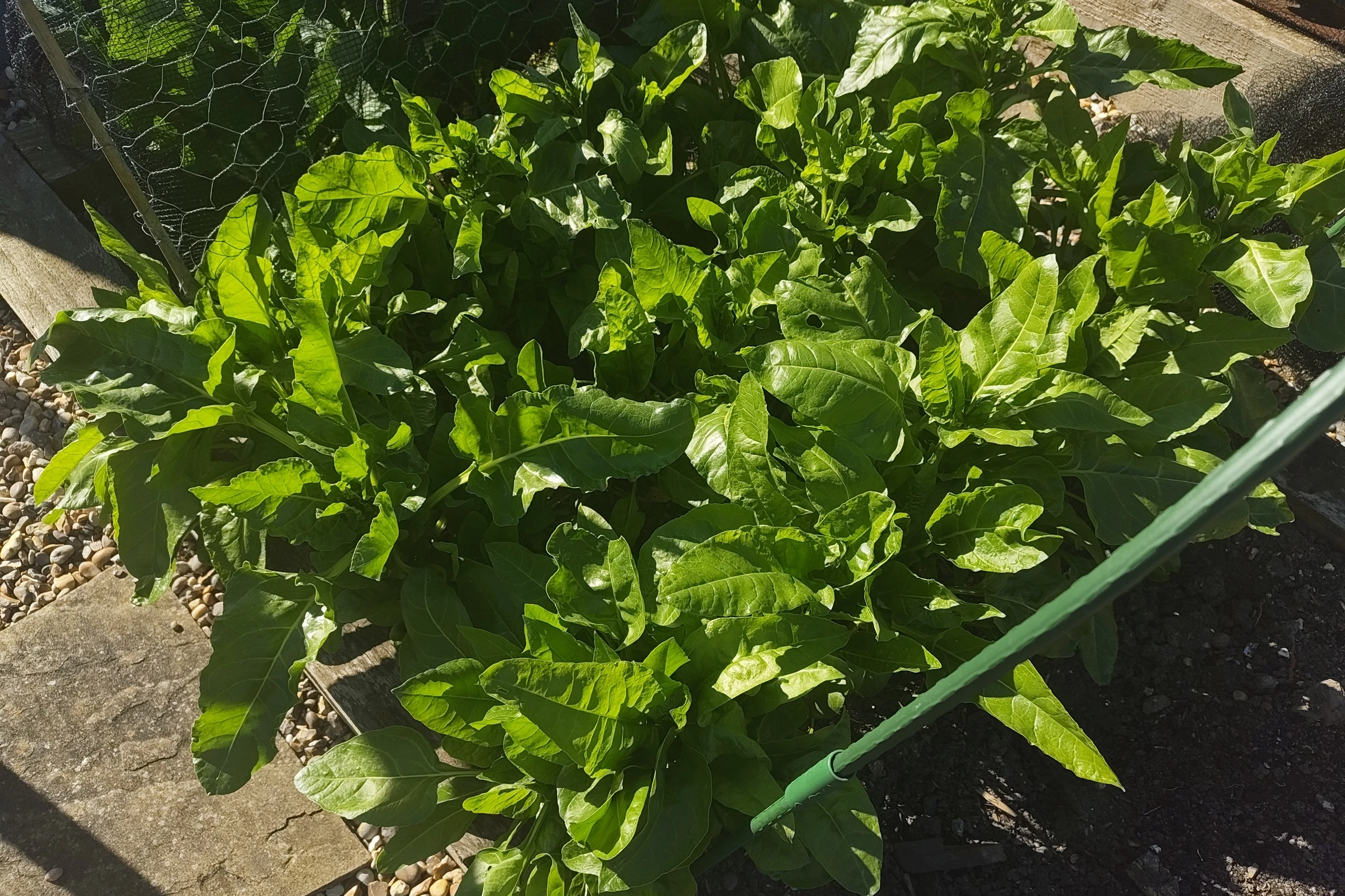

Growing perpetual spinach is one of the easiest ways to get a consistent source of healthy greens from your garden. Except, perpetual spinach, well, it just doesn’t stop. So, unless you love spinach so much that you’ll eat it 5 nights a week, you need to learn how to preserve it.
In this guide, I’ll show you (with step-by-step pictures) how I process my homegrown spinach for freezing. This is the easiest way to preserve spinach and requires no knowledge of canning, pickling or jarring. It’s perfect for beginners. You just need a bucketload of spinach, a freezer, and some time.
P.S. if you cannot freeze all your spinach, it will store in the salad drawer of your fridge for a week or more. You can also share it with neighbours and wilt it down when it’s getting past it’s best to keep it around a little longer.
Quick Guide to Perpetual Spinach
Perpetual spinach (Beta vulgaris) is not technically spinach – it’s actually a variety of chard. But the leaves look and taste like spinach, and even better, they grow perpetually. You can grow them from seed or small plug plants.
So, while true spinach will die back after a harvest and only last the season, perpetual spinach can give you harvests for a full year… and grow through to the next one. But there’s a ‘but’ coming.
If you let your perpetual spinach bolt (aka form flowers and then seeds), it will stop growing the delicious leaves you can harvest for eating.
So, regularly harvesting and maintaining your perpetual spinach is essential. Harvesting is basically like pruning it. And that means you could have rather a lot of spinach on your hands.
How to Tell When Your Perpetual Spinach Will Bolt
When your spinach is going to bolt, you’ll notice a very thick central stem growing with small leaves (much smaller than usual) growing along it.
At this point, the plant is putting all its energy into growing that central stem (which will eventually have flowers at the top and go to seed) instead of growing the large tasty leaves that you can harvest.
Unless you want to let your perpetual spinach go to seed for propagation, it’s best to harvest the leaves regularly to keep the plant growing more foliage.
How to Harvest Perpetual Spinach
You will need:
- Bag for harvesting (any will do, even a plastic shopping bag)
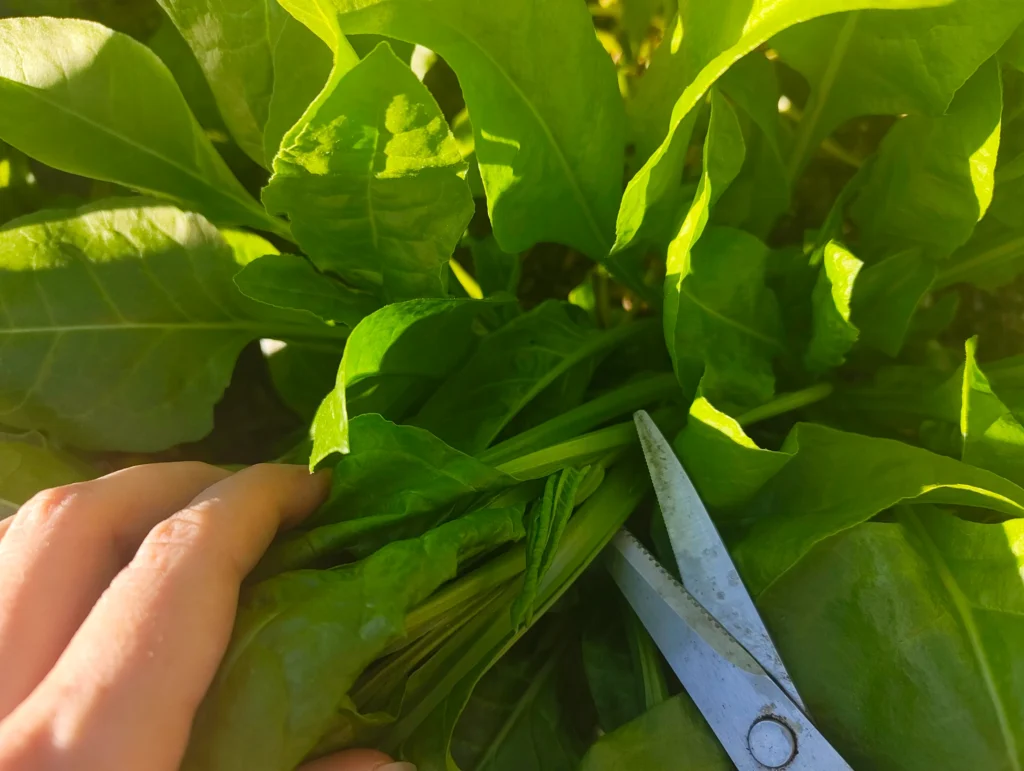
- Sharp, clean kitchen scissors
The method is simple:
- Identify your perpetual spinach
- Cut off any yellowing or diseased leaves and discard
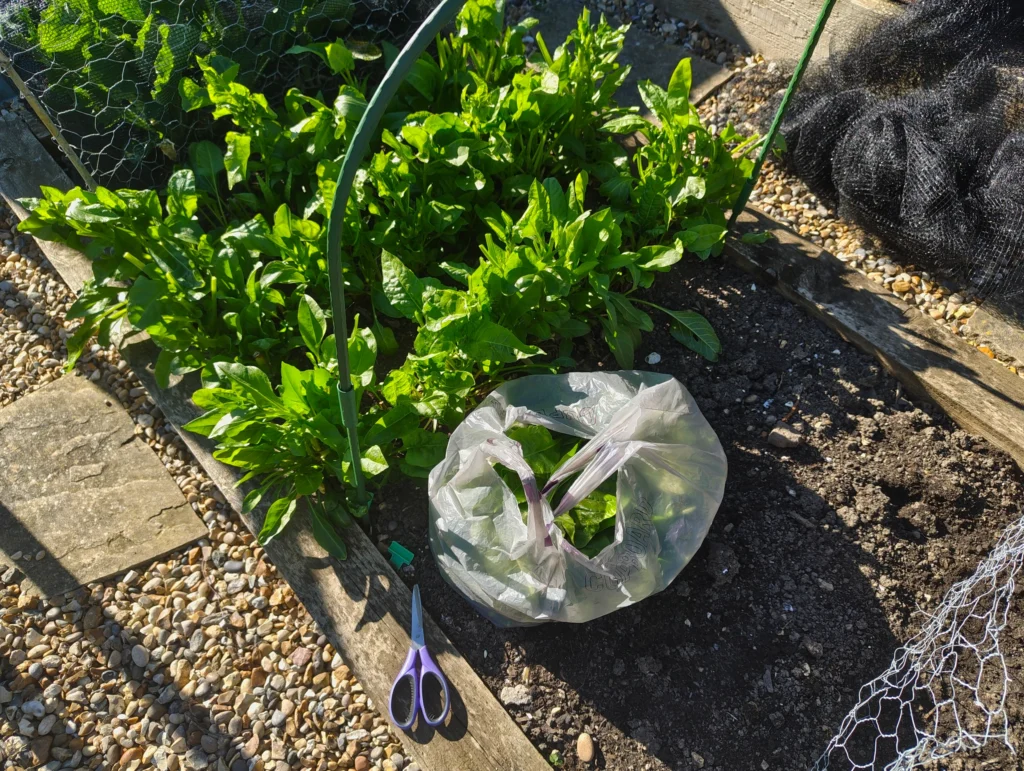
- Cut off up to 80% of the healthy leaves on each spinach plant – make the cut not too close to the leaf
- Collect the leaves in your bag and store in the fridge for up to a few days if you’re not ready to process and freeze them immediately
I have found that leaving 20% of the leaves on the plant helps it grow back and provide another harvest quicker, but you can go more extreme if you want. Perpetual spinach is a hardy plant and should bounce back.
How to Process and Freeze Perpetual Spinach
Freezing spinach leaves fresh isn’t ideal. The leaves will take up a lot of space in your freezer and become brittle or crumbly. So, you need to blanch them before you freeze them. This reduces their size while retaining their fresh green colour and nutrition.
You will need:
- Harvested spinach
- Chopping board and knife
- Large saucepan
- Slotted spoon
- Baking paper
- Freezable tray
- Water for washing and boiling
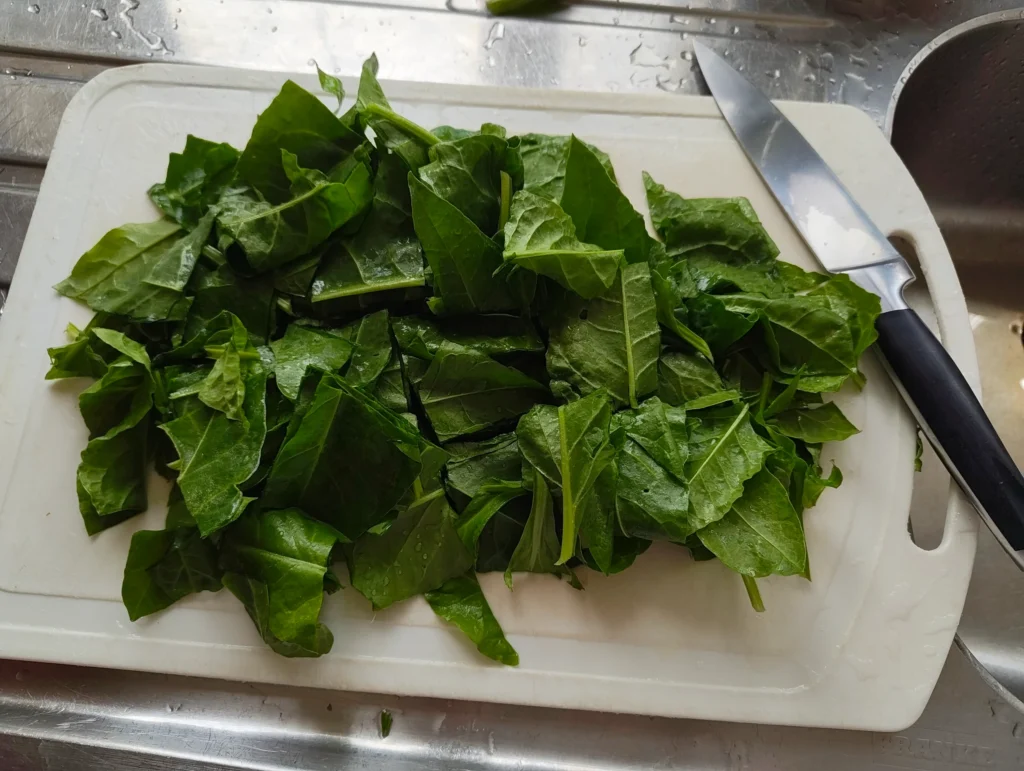
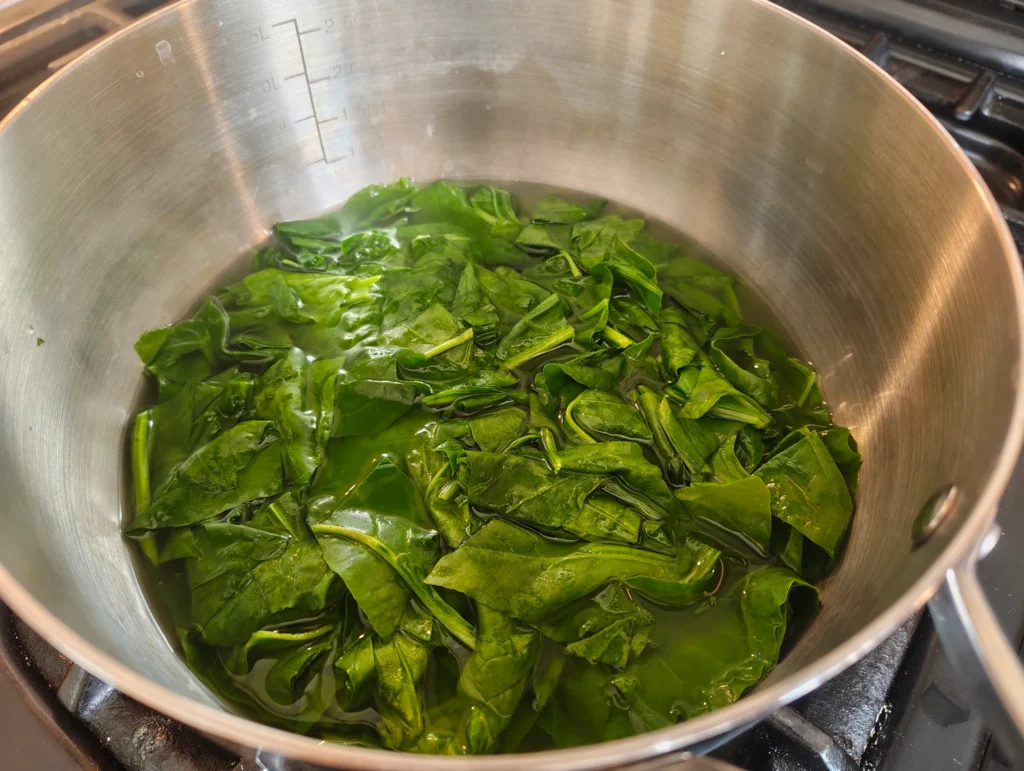
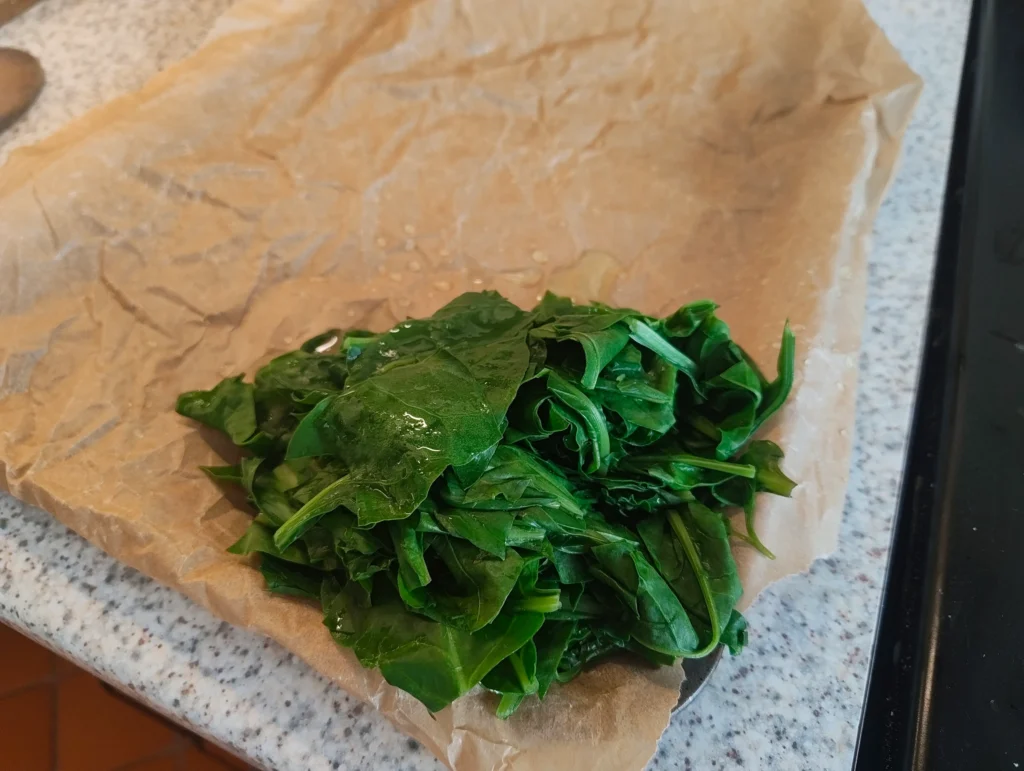
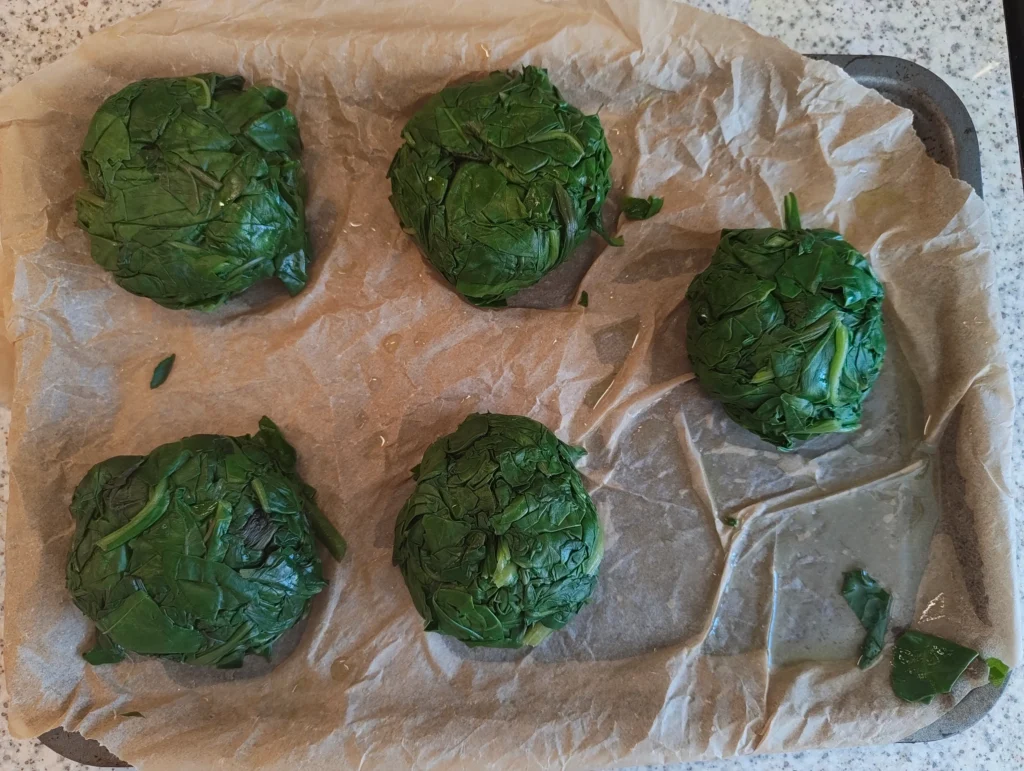
It’s an easy but slow process. It’s best to work in batches rather than trying to wash, chop, blanch and freeze all the spinach at once:
- Wash the leaves thoroughly, checking both sides for bugs
- Chop off any extra long or tough stalks
- Roughly chop the leaves
- Boil the kettle and pour a small amount of water into your large saucepan, place over a low heat
- Add your chopped spinach leaves to the pot and stir frequently, letting the hot steam wilt them down
- Use the slotted spoon to remove the leaves and heap them onto a freezable tray covered with baking paper
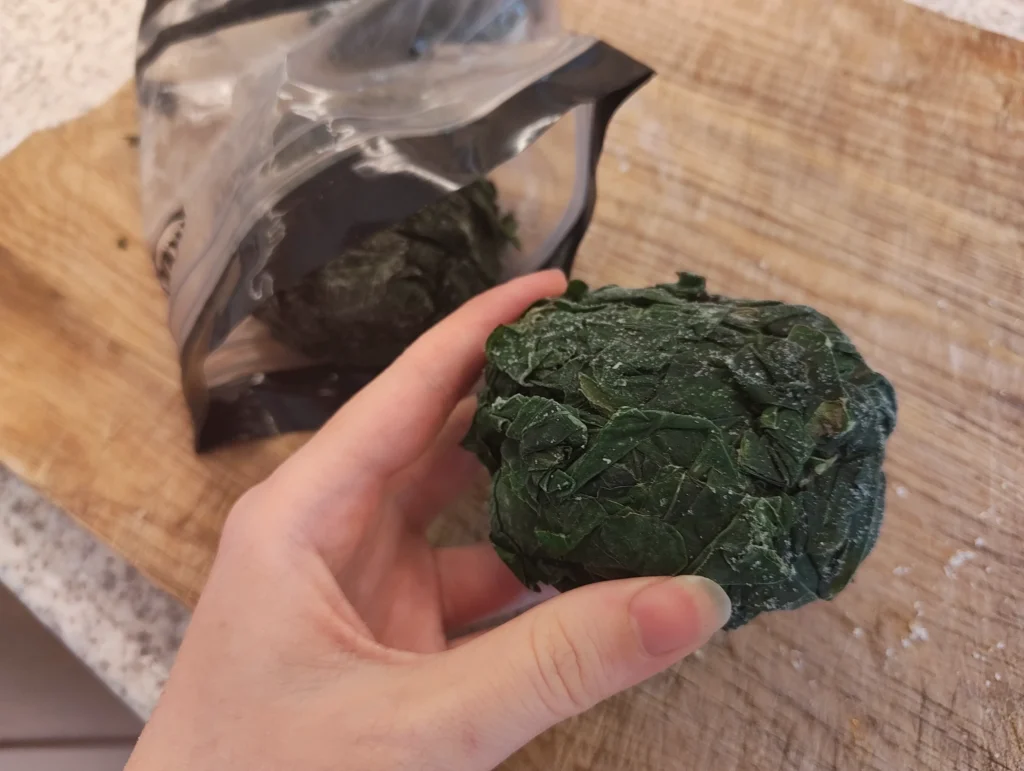
- When cool enough to touch, shape the leaves into a small ball or puck, squeezing out any excess water
- Place the tray in the freezer overnight. Remove in the morning and transfer to a ziplock food bag (squeeze out any excess air to prevent freezer burn). Store in the freezer until use
Each ball or puck of spinach leaves should be enough for one meal, as it’s near impossible to break a chunk off without defrosting the entire ball. I cook for the three adults in my household, so I know that I need about as many leaves as you’d get in a standard bag of spinach from the supermarket for a single meal.
When chopping the leaves, go large. You can always break the leaves down more once they’ve defrosted for your meal, but you can’t put small pieces back together again. I chop into 1.5 to 2 inch squares.
To defrost your spinach, leave it in the fridge overnight or use the defrost setting on your microwave. You can also add the frozen spinach directly to your recipe (I use it in curry and pasta sauce regularly) but it will take a little while to defrost so don’t leave it to the last minute.
FAQs
Perpetual spinach is easy to grow from seed. Either sow indoors and move outside when a few leaves have formed, or sow directly in the ground from March. Sow a couple centimetres deep and around 30cm apart.
In my experience, 2 years minimum. The plants will fade faster if they bolt or they fall foul to pests. Slugs, snails and birds will all eat your spinach, and although the plant is hardy it can also fall to mould and mildew.
The foliage is ready to harvest from late spring right through summer, autumn and winter. It takes about 8 weeks from when the plants emerge for the leaves to be ready. You can harvest the plant whenever you like, picking the small young leaves for salad or letting the leaves grow larger and harvesting for my preservation method above.
I personally cannot tell the difference in taste compared to true spinach. It is succulent and juicy with sweet green vegetal notes. There’s no bitterness or earthiness.
The young, small leaves can be eaten raw for salad. The larger leaves are great for wilting into sauces. Saag aloo, tomato pasta sauce, soups, scrambled eggs, stews… you’ll find a lot of recipes online.
True spinach (Spinacia oleracea) is what you buy in the supermarket. It is annual (lives only for one season and then dies) and has slightly thinner leaves. Perpetual spinach (Beta vulgaris subsp. cicla var. cicla.) is very similar in taste and appearance to true spinach, but is actually a type of chard. It is hardier and therefore easier to grow, and is perennial so it lasts for years and years.
If it has already been frozen once, you cannot freeze it again. It destroys the structure of the leaves and it really won’t taste good.