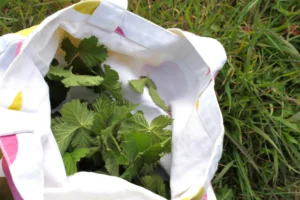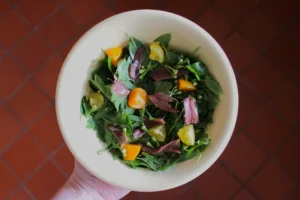

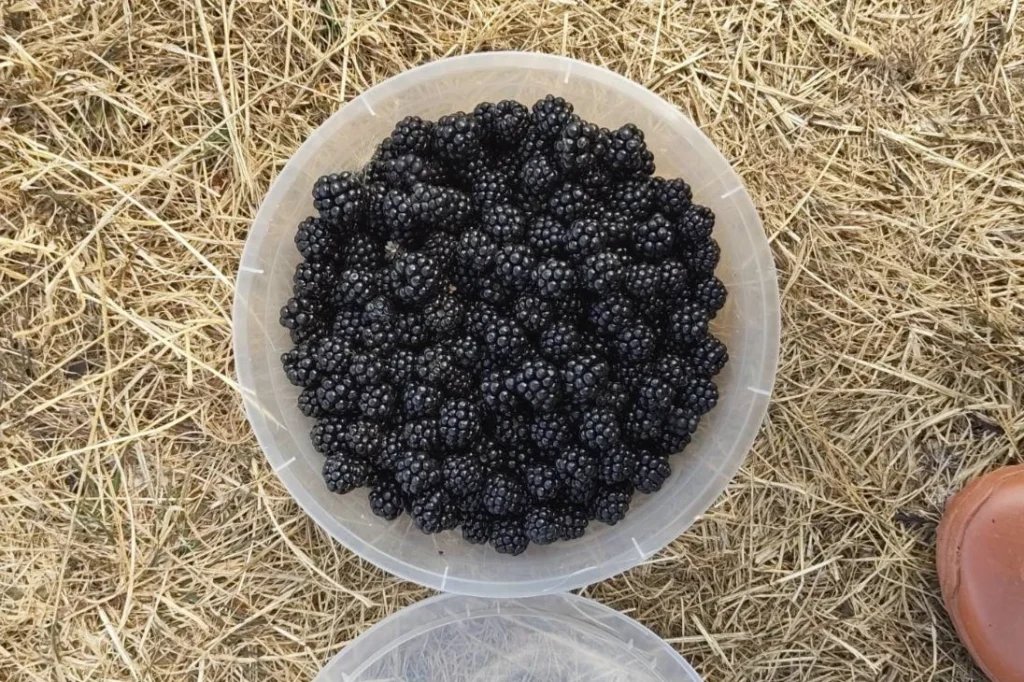
The heat has been awful for my apple trees and the farmer’s crops are lacking in the fields, but the natural hedgerows are (for the most part) thriving. 2026 has been an exceptionally good year for blackberries.
You can find blackberries across the UK. They’re impossible to miss at this time of year. So, grab some tupperware or foraging bags and pick some blackberries to make my delicious foraged blackberry jam.
This foraged blackberry jam recipe is very easy and beginner-friendly, even if you’ve never made jam before. You don’t need any special ingredients or equipment. In fact, I’ve found that not using a thermometer is the best way to make jam (I’ll explain why in the FAQs).
P.S. if it’s the wrong time of year for blackberries, you may be able to use the leaves for tea instead…
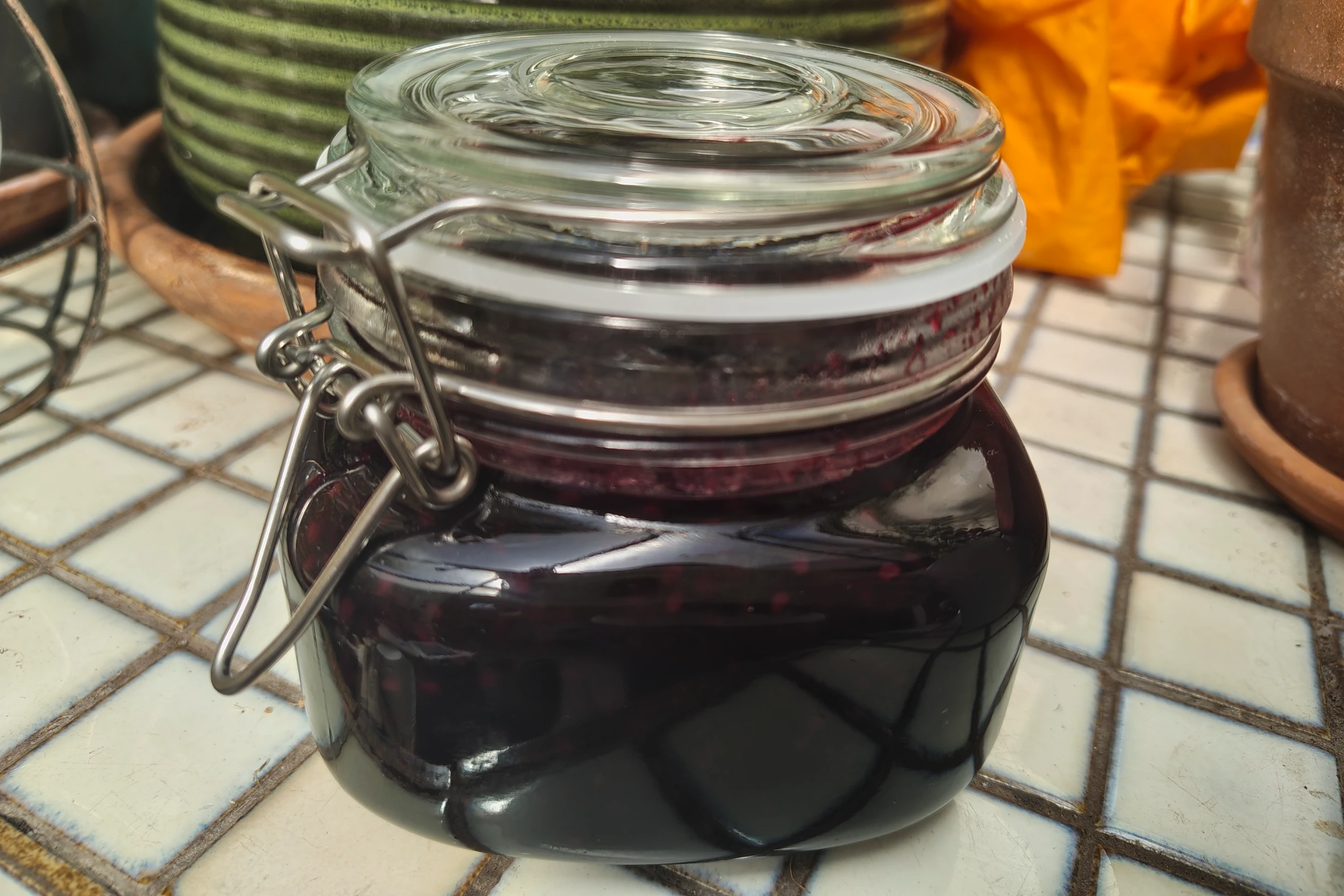
Makes roughly 800ml of jam
Ingredients
- 700g foraged blackberries
- 410g granulated sugar
- Juice of half a lemon (approx. 2 tbsp)
Method
- Place a small saucer in the freezer to get very cold.
- Sterilise your jam jars by washing them thoroughly and heating in the oven at 120°C for 15 minutes – they should still be warm when your jam is ready for jarring.
- Wash your blackberries thoroughly, checking them over for any half-eaten ones or hidden insects. I like to let them sit in water for a while to let the debris float to the surface.
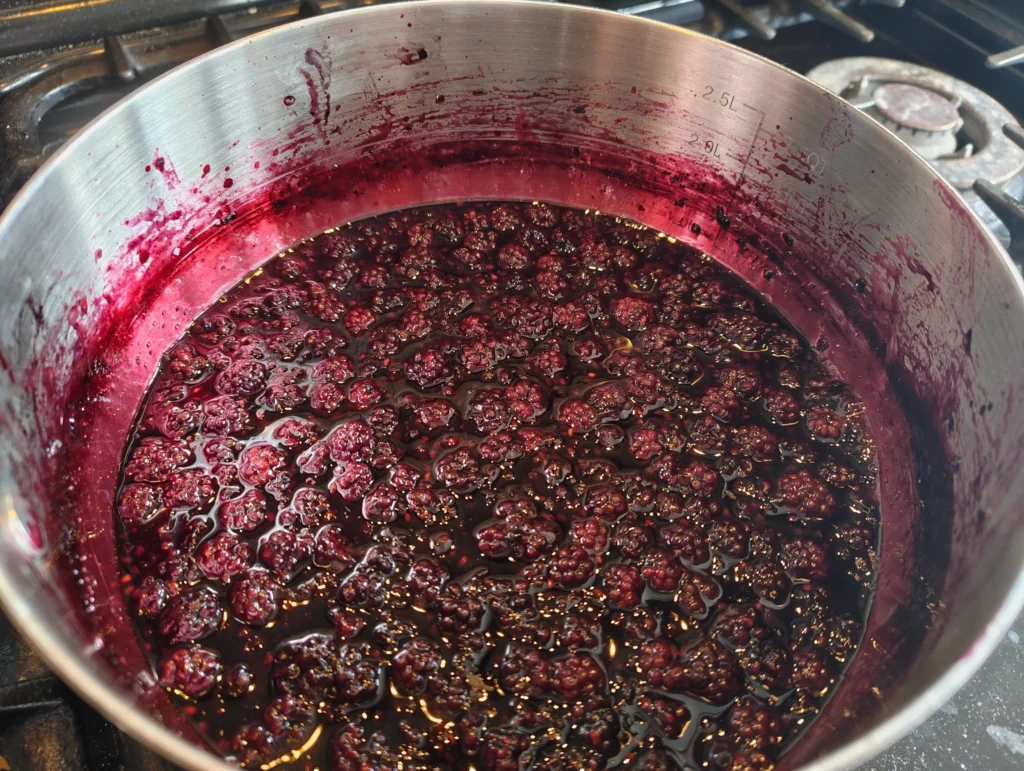
- Place your blackberries in a large saucepan and cook gently over a medium heat. Stir occasionally to stop them sticking.
- Once half of your blackberries have dissolved into liquid (or more, if you prefer a less chunky jam), slowly pour in the sugar, stirring constantly.
- Pour in the lemon juice, stir, and bring to a boil. Then lower the heat to a medium boil (not too vigorous, but more than a gentle simmer) and let it bubble for 5 minutes.
- Take your frozen plate out of the freezer and spoon a few drops of the jam onto it. Push the jam with your finger – if the surface wrinkles, it’s ready, but if it’s still liquidy it needs longer.
- Continue to boil your jam, testing every few minutes on your plate, until it wrinkles when pushed. Immediately take your jam off the heat.
- Dispense into your sterilised jam jars and pop the lids on. They will form an airtight seal as the jam cools.
FAQs
Yes, you absolutely are. Any media stories about receiving fines for foraging blackberries are total nonsense scaremongering.
There is plenty for the wildlife too.
You will find, when foraging blackberries for jam, that there is a vast amount of fruit you don’t pick. Most of it will be out of reach, some of it will be too close to the ground (avoid picking these, especially if there are lots of dog walkers in the area), and others will already be half eaten or spoiled.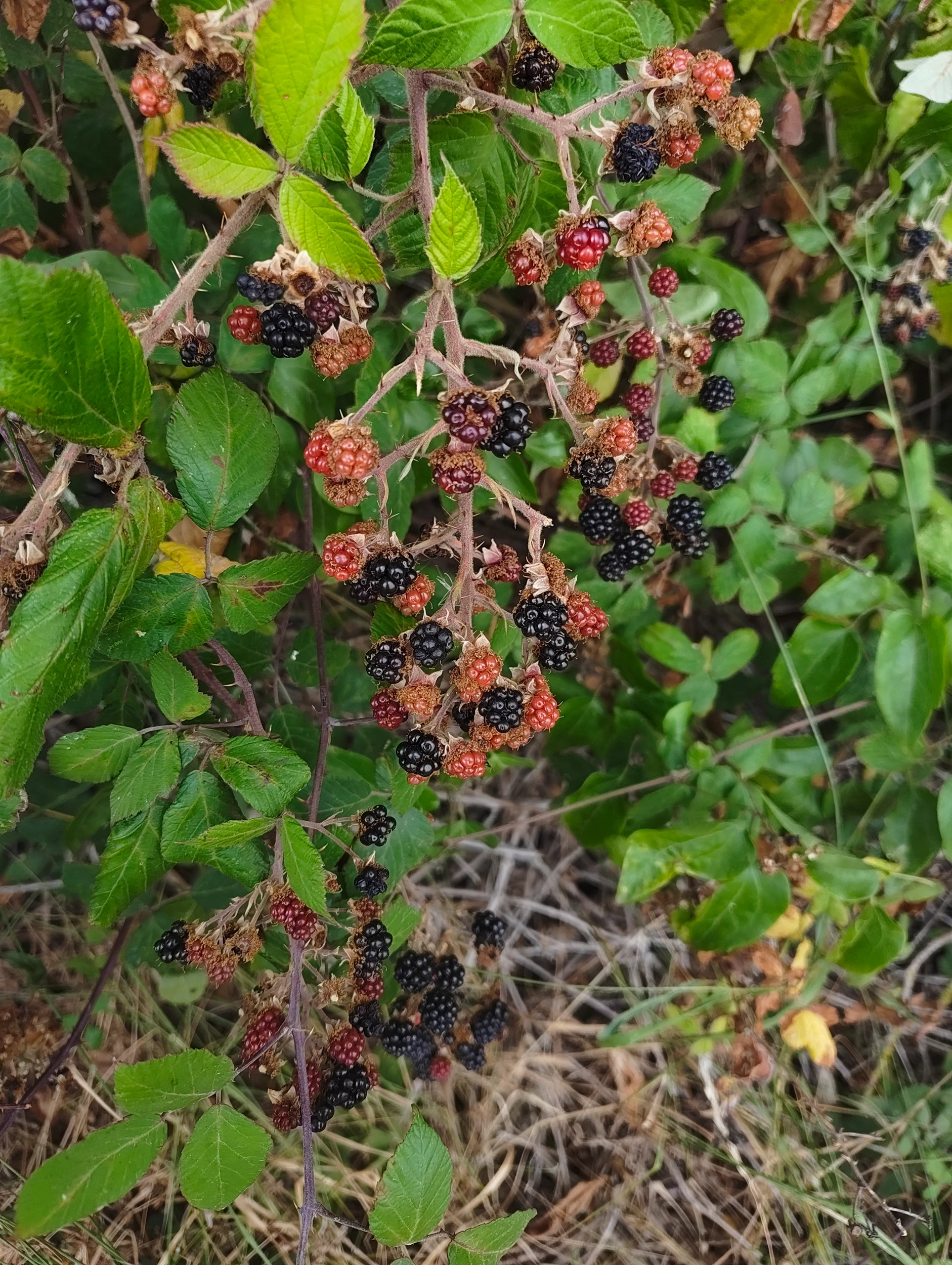
Yes, just adjust the other ingredients accordingly. For every 100g of blackberries, you need roughly 60g of sugar.
No, I use jars that I’ve saved. As long as they are thoroughly washed and sterilised before use, they will work perfectly. If you want to buy jars especially, my square clip-top jar is here on Amazon.
The recipe makes around 800ml of foraged blackberry jam, so that’s 3 full 250ml jars plus a bit leftover. My large square clip-top jar holds 500ml. If in doubt, just sterilise more jam jars so you won’t run short when jarring your jam.
Any jars that aren’t entirely full of jam will need to be kept in the fridge and used first. Full jars can be stored for around 12 months.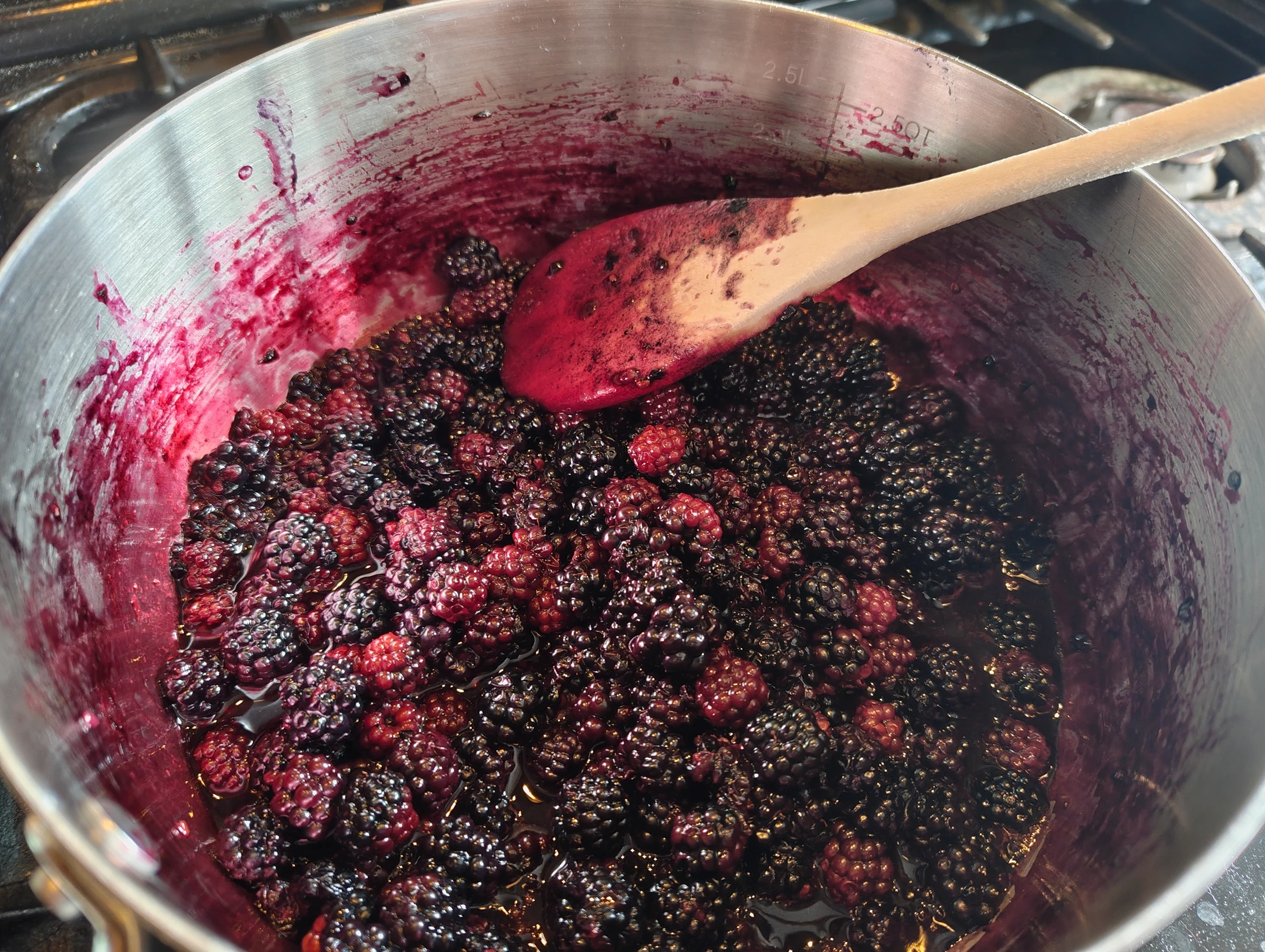
The compound that helps jam set is pectin – that’s the added ingredient in jam sugar. Blackberries are already a good source of pectin, so you don’t need to add any more. Adding the lemon juice (acid) is all you need.
I have made jam several times, once using three different thermometers (a digital food thermometer, a sugar thermometer, and a meat probe), and found that all gave me different temperatures. There’s also a variance in temperature from the very edge of the saucepan to the centre. I have had jams reach the “suggested” 104°C that didn’t set, and others that didn’t reach that temperature and did set.
This is because jam doesn’t magically set when it reaches a temperature… it sets when enough water evaporates to get the right consistency.
That’s why the plate test is the most accurate way to tell if your jam is ready. Use your eyes, your senses, to catch the jam at just the right time.