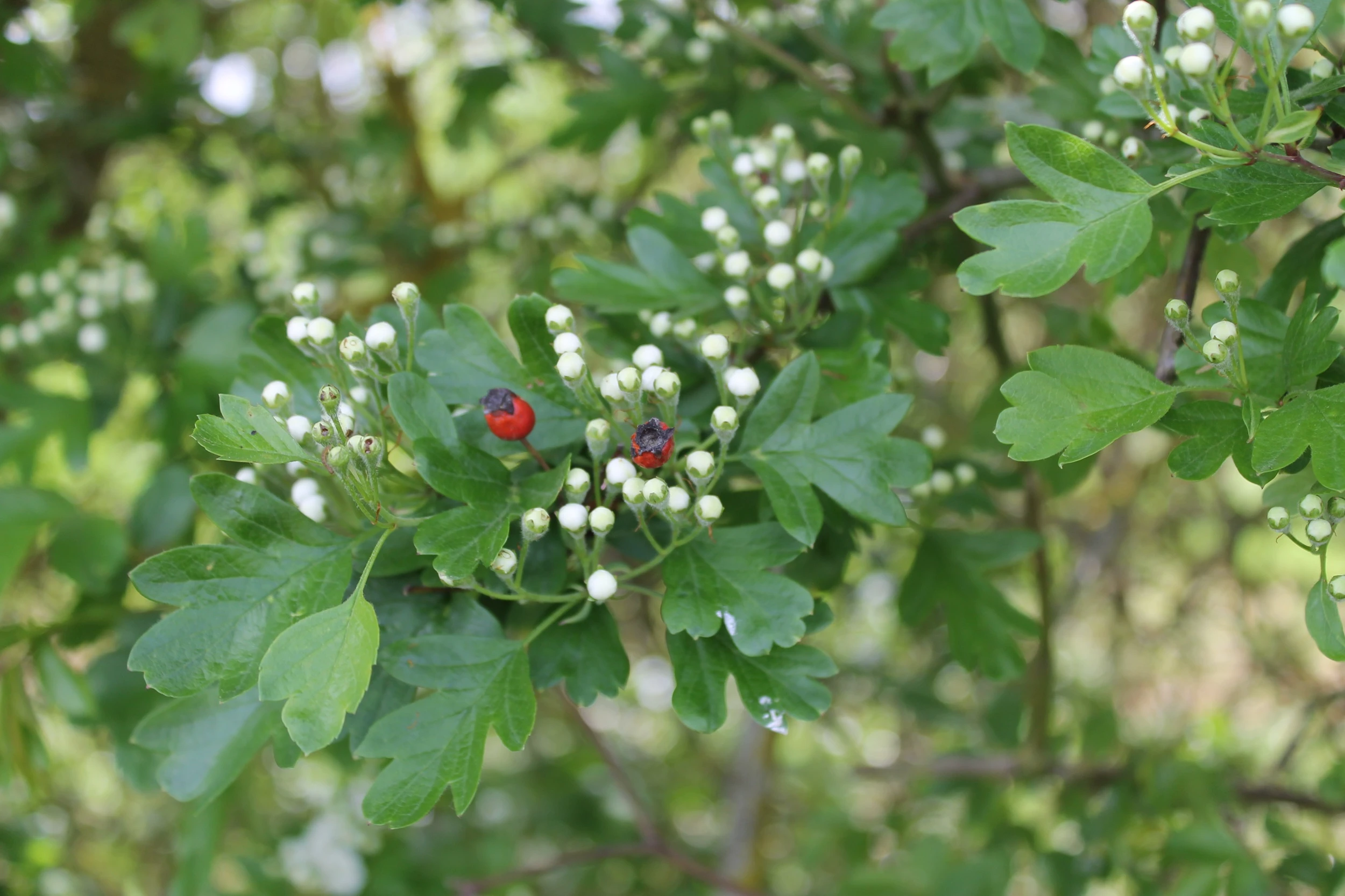

Hawthorn is one of the most widespread hedgerow plants in the UK. This shrub blooms with pretty white flowers in May and small red berries in the autumn and winter. It’s mostly a good food source for British wildlife, but did you know that it’s edible for humans too?
In addition to having a rich history in our country (I’ll explore this at the end), hawthorn is a valuable food source and can be used to make a range of sweet and savoury dishes. In this guide, I’ll explain what parts of the shrub are edible, when to forage them, and what to make with your harvest.
Is Hawthorn Edible?
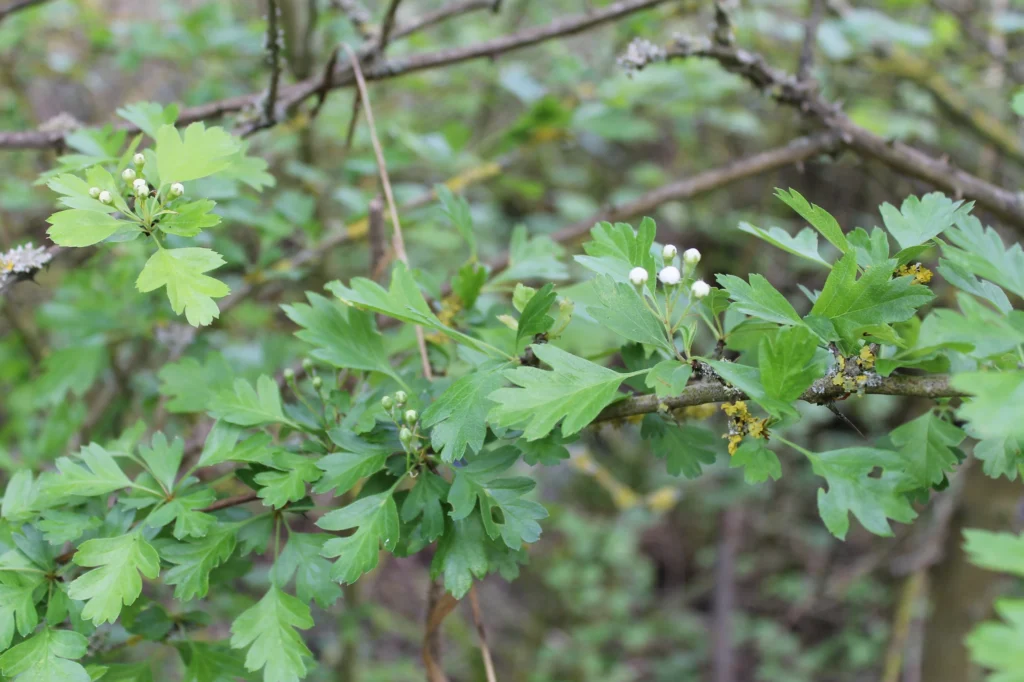
There are a couple of hawthorn varieties in the UK – Common Hawthorn (Crataegus monogyna) and Midland Hawthorn (Crataegus laevigata) – but both are edible and only the discernible difference is the number of seeds inside the fruit.
Parts of the plant that are edible:
- Leaves (best when very young)
- Flowers (bloom in May)
- Fruits (best cooked first)
In terms of nutrition, hawthorn leaves and berries provide vital nutrients and have cardioprotective effects, while the flowers don’t have much nutrition but are still useful for flavouring other foods.
You can’t make a substantial meal from hawthorn alone, but the leaves add some freshness to storecupboard meals (think hawthorn leaf pesto to brighten up plain pasta) and the fruits can be preserved to provide a source of vitamins in winter (haw ketchup or jam will last months, or years if properly processed and stored).
While hawthorn can’t be a staple in your diet the way starchy vegetables can (think potatoes and turnips) it is still an extremely valuable plant to forage, providing both flavour and vitamins in abundance.
Identifying Hawthorn Trees
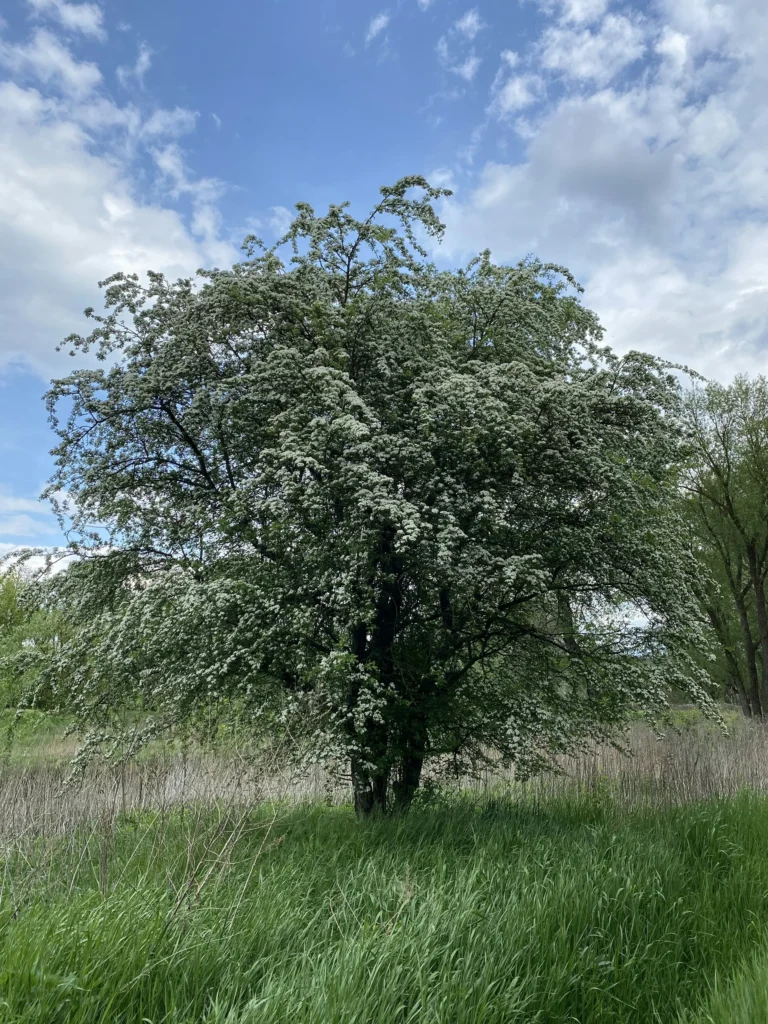
Hawthorn trees are extremely hardy and found all over the UK in hedgerows and growing as standalone trees (though if you’re superstitious, stick to the hedgerows only for foraging as folklore suggests the standalone trees are home to fairies).
You can identify them by:
- Slender branches with long, sharp thorns
- Parsley-like bright green leaves with 3 segments, and usually 5 to 7 toothed lobes
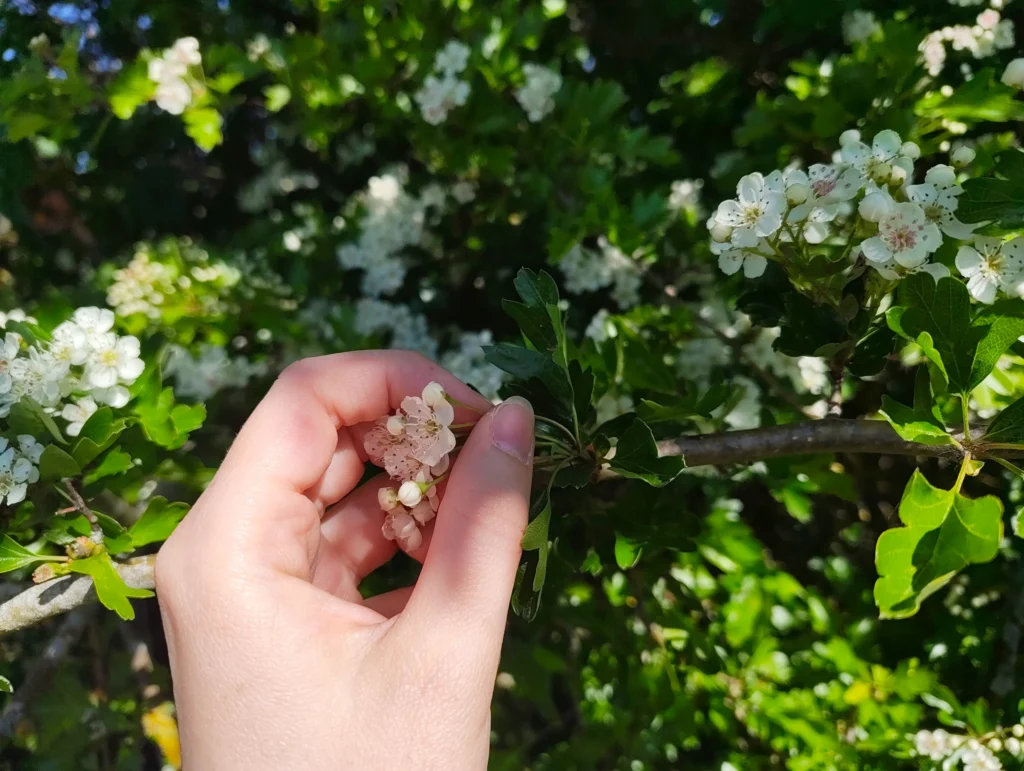
- (Late April to May) White flowers with 5 petals, growing in dense clumps
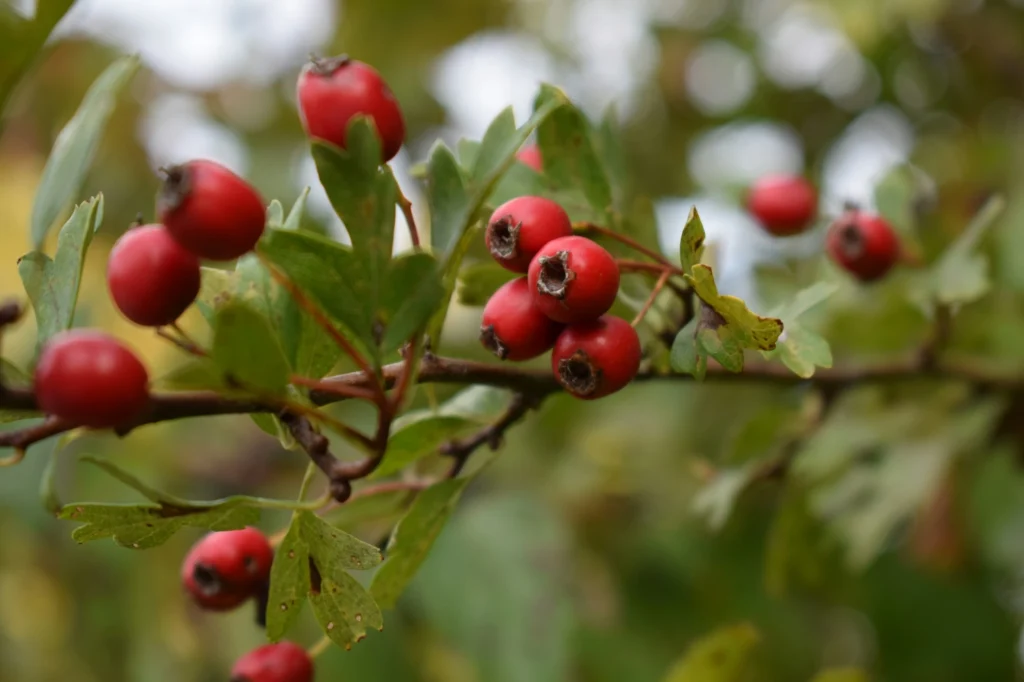
- (September into Winter) Crimson red berries, around 1cm in size with a five-pointed star at the base
💡 Foraging Tip: hawthorn often grows close to blackthorn, which can look similar in the spring due to both having white flowers and thorns. However, blackthorn leaves are oval shaped and not edible. In the autumn, they will produce sloes instead of haws.
In general, hawthorn is easy to spot in the UK and rarely confused with other trees besides blackthorn in the spring. If you have any doubts about the plants you find, always err on the side of caution. I like to use a plant identification app like the RHS Grow app.
Hawthorn Leaves
- Best Time: March
- Flavour: Slightly nutty
- Uses: Eating, tea
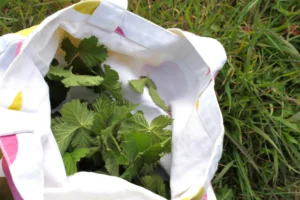
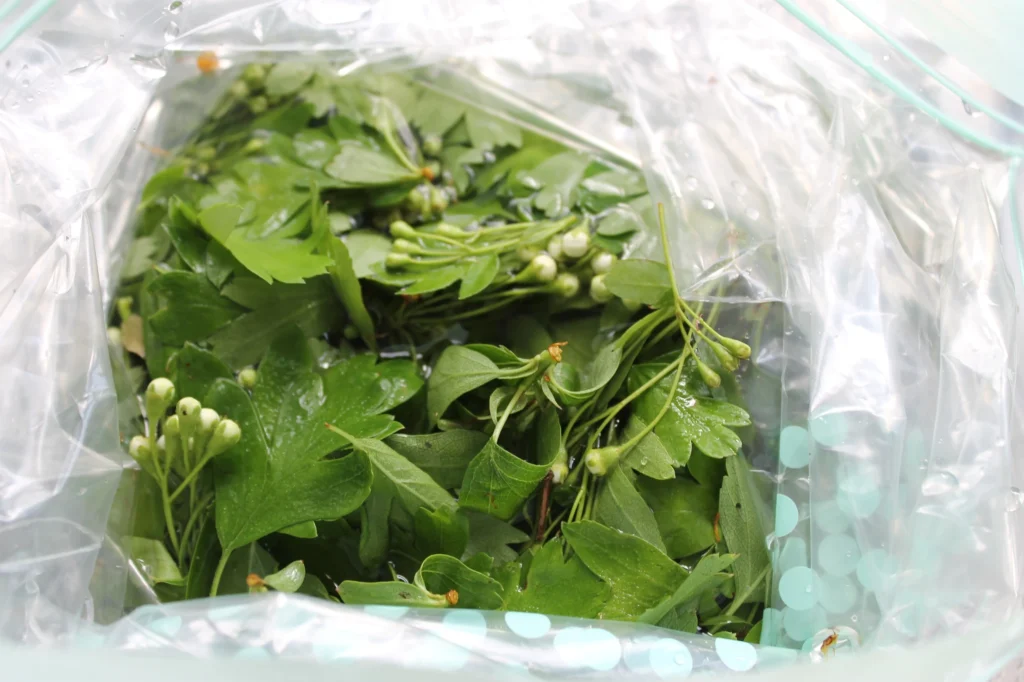
Hawthorn leaves are only good to eat when they are very young. Harvesting when there are still leafbuds on the branches is the best time, which is usually in March.
If the hawthorn has already started to flower, the leaves tend to be tougher and leathery. They are still edible (I can attest to this) but the texture and flavour isn’t the best.
To harvest hawthorn leaves, pinch a few leaves off each branch, leaving plenty still on the tree. Watch out for the thorns!
The berries of hawthorn are most widely studied, however hawthorn leaves may also have cardioprotective effects. They are rich in flavonoids and don’t have the high acidity of the berries.
Hawthorn leaves are referred to as “bread and cheese” in folklore as they were a staple to eat during a famine or times of hardship.
Recipes
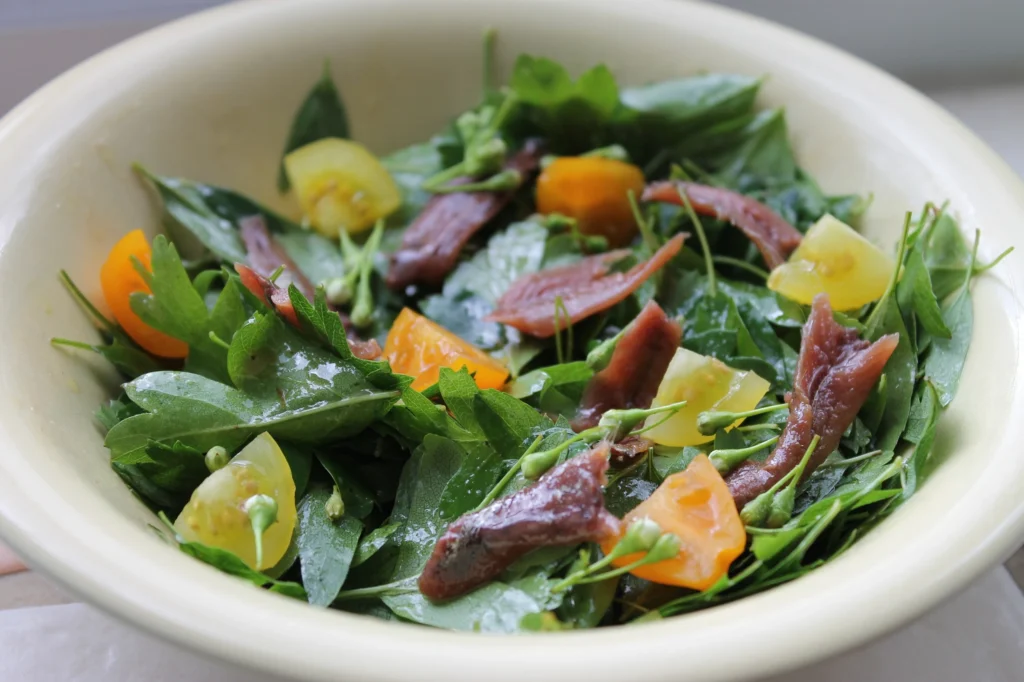
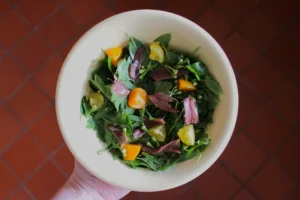
The young leaves can be used in place of spring greens in most recipes. This means they are particularly good for:
- Salads
- Stir fries
- Soups
- Pesto
- Bubble and squeak
The leaves are much smaller than spinach and cabbage, but they can often be used in similar ways and substitute for both these ingredients in your recipes.
If you want to champion the flavour of hawthorn leaves, try my Hawthorn Niçoise Recipe.
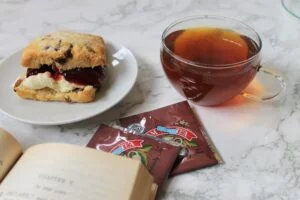
Hawthorn leaves, like the flowers and berries, can also be used to make herbal tea.
Hawthorn Flowers
- Best Time: April-May
- Scent: Musky anise
- Flavour: Nutty almond
- Uses: Tea, Cordial
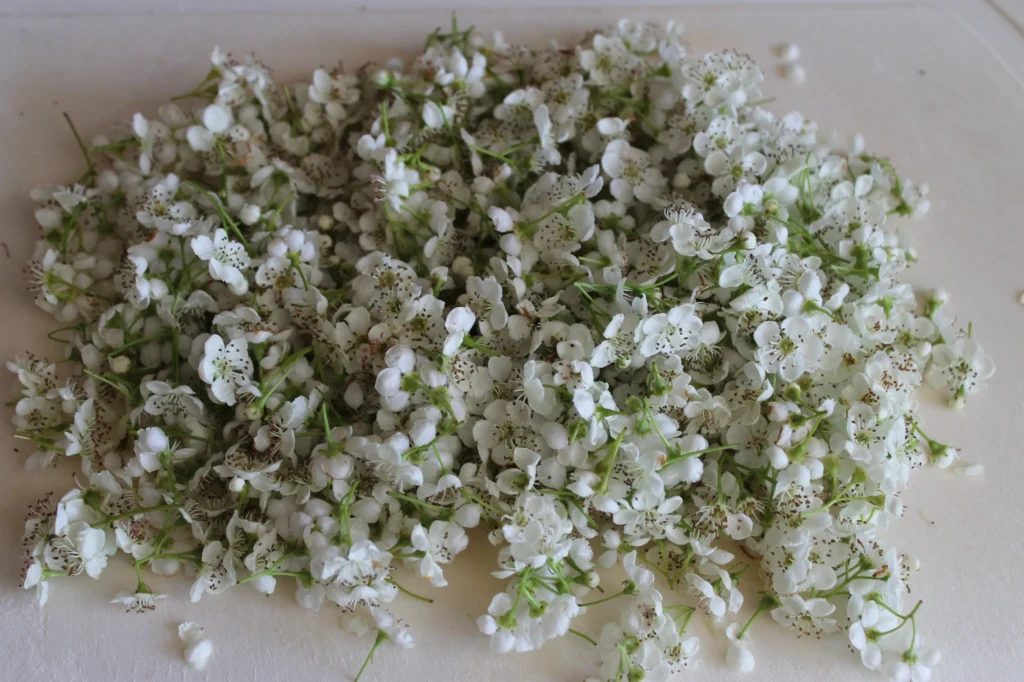
Hawthorn flowers, also known as maythorn flowers as they tend to be in full bloom during May, are entirely edible just like the leaves. You can identify them by their white or blushing pink colours and 5-petal shape. They grow in big clusters and you’ll need to be careful not to prick your fingers on the thorns as you harvest them.
To harvest the flowers, literally pull them off the tree. Take a handful from one cluster, then move on to the next branch. Leaving most of the flowers on the tree ensures that it can produce lots of fruit come autumn/winter. Of course, hawthorn is extremely common in the UK and there will be many branches high up that you cannot reach regardless – so don’t worry too much, there’s plenty for our wildlife to munch on after you’ve been foraging.
The flowers have a musky, aniseed-like aroma and almond-like flavour, which is quite sweet and pleasant… but they don’t have much nutritional benefit. They are good for flavouring other recipes but aren’t a staple food when foraging for a meal.
Recipes
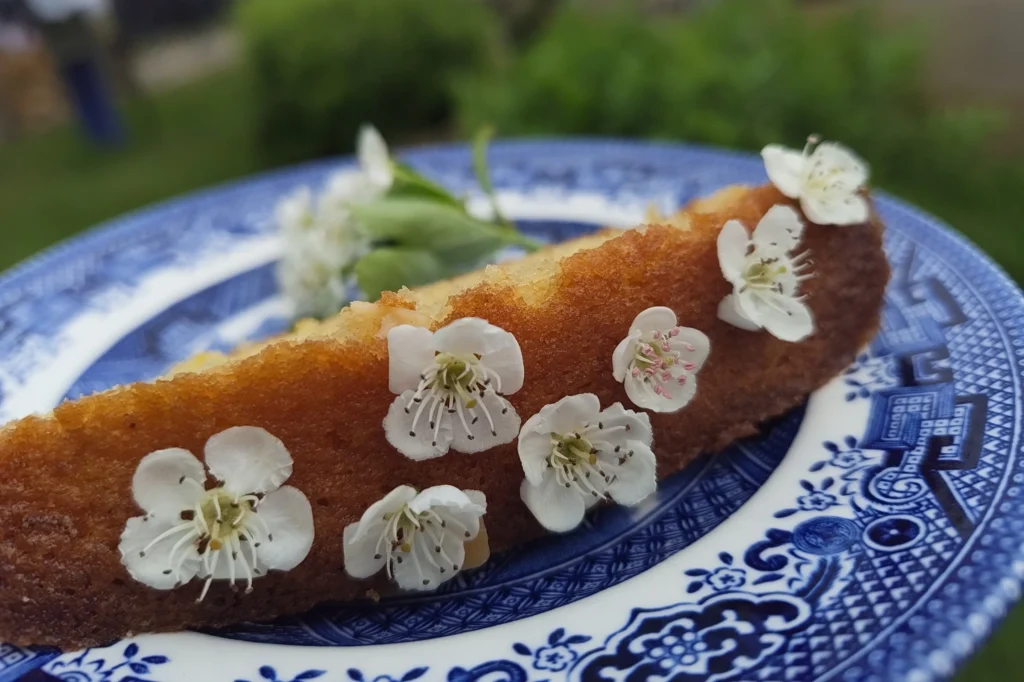
You can use hawthorn blossoms in much the same way as other blossoms you can forage in the UK (think elderflower or sweet violets, for example).
Hawthorn blossoms can be used to make:
- Syrups and cordials
- Delicate cakes
- Tea
- Wine and liqueurs
Once you’ve made a simple hawthorn blossom syrup, you can pour it into cakes, use it to make icing, or any other sweet recipe.
Find my simple hawthorn syrup recipe here, and give my delicious hawthorn blossom cake recipe a go here.
Totally Wild UK has a recipe for Hawthorne Bakewell Tart that I am absolutely dying to try too.
Hawthorn Berries
- Best Time: September-December
- Flavour: Sweet, spicy, tangy red berries
- Uses: Jams, jellies, sauces, beverages
Hawthorn berries (also called haws) are so distinctive to me – they’re a staple of the British hedgerow. Ripening from September onwards, hawthorn berries are roughly 1cm in diameter and dark red in colour. To identify them, look for a star shape on the base of the berry.
Like the flowers of hawthorn, the berries are abundant and grow in small clusters. They are eaten by the birds, so when harvesting them be sure to leave plenty around for the wildlife to feast on.
Unlike the wildlife, you definitely do not want to eat hawthorn berries straight off the tree. When raw, the creamy flesh of the berries is incredibly sour and tangy, with a large seed on the inside. Most recipes involve simmering or stewing the berries, then sieving them to remove the stones and skins easily. The best way to use up hawthorns is to make jam or other sauce like ketchup.
Once you’ve harvested haws, you can store them in the fridge until you’re ready to use them. They’re naturally tough berries and should last longer than store bought fruits. Just wash them and store in an airtight container.
Haws are naturally high in pectin, a chemical that occurs naturally in many wild fruits. When heated, it becomes a thickening agent. This is why haws are so great for making jam – you won’t need to buy ‘jam sugar’ (which contains additional pectin) to get a good set.
Nutritionally, hawthorn berries are high in vitamin C and flavonoids. I’ll explain their historical medicinal uses below.
Recipes
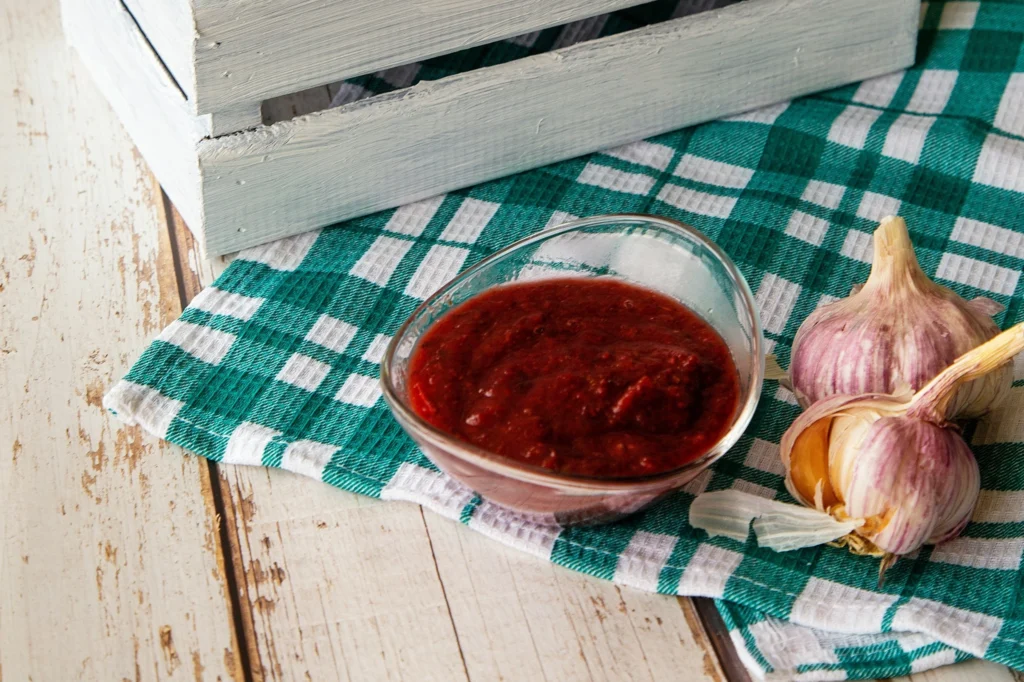
Thanks to their naturally tart flavour and pectin, hawthorns can be used for a plethora of sweet and savoury recipes, including:
- Jam and jelly
- Chutney and other preserves
- Ketchup
- Fruity sauces (think sweet and sour or hoisin)
- Wine and liqueurs
The flavour of hawthorn berries once cooked is sweet and spicy, but still a little tangy in a pleasant way.
The Interesting History of Hawthorns
Hawthorn mythology and history seem to be a bit at odds. On one hand, hawthorn shrubs are closely associated with faeries and bad luck. Supposedly, the blossoms should never be brought into the house, and the smell of the blossoms was similar to the decaying bodies left by the Great Plague of London.
We now know that this is caused by trimethylamine, a musky-smelling chemical found in the flowers that’s also released by decaying flesh. Gross, yes, but thankfully it doesn’t translate into the kitchen – your hawthorn blossom products will smell like almonds.
Despite the negative connotations associated with the shrub, the leaves have been eaten as “bread and cheese” for centuries and the flowers were popular for making wine. Whole branches were cut down in May to celebrate May Day and create garlands (so long as they weren’t brought inside).
Regardless of the long history of hawthorn in the UK, it is a valuable shrub to identify and harvest for foraging throughout the year. Let me know how you get on with foraging hawthorn and share any recipes you find in the comments below, I love trying new ones.