
3 months ago, I switched from using whatever simple moisturiser was on offer at the supermarket to pure shea butter. Don’t get me wrong, some of those conventional moisturisers did a decent job of soothing my dry winter skin… but the results didn’t last and the prices were creeping up with inflation. So, I decided to see if I could swap to something simpler and get a better result.
Compared to formulated moisturisers, the pure shea butter I bought for my skin was simple. Just one ingredient, minimally processed, and packed into a glass jar.
This is my honest review of what using shea butter for skin is really like, from texture and absorption time to real results after 3 months.
Why I Chose a Single-Ingredient Moisturiser
Most moisturisers on the shelves of supermarkets – whether they’re budget-range or high-end skincare – have a long list of ingredients. That doesn’t necessarily mean that all the ingredients are bad, but it does mean that the product is quite complex to make.
I’ve been looking to find more simplicity in my skincare routine, choosing products mindfully not just for their effectiveness but for how and where they are made.
Choosing products for their simple, natural ingredients feels right for me, and I wanted to see if it felt right for my skin too. This is what the Navigation Codex calls flow – you can learn more about flow and resistance concepts here.
What Is Shea Butter Made From? (Quick Overview)
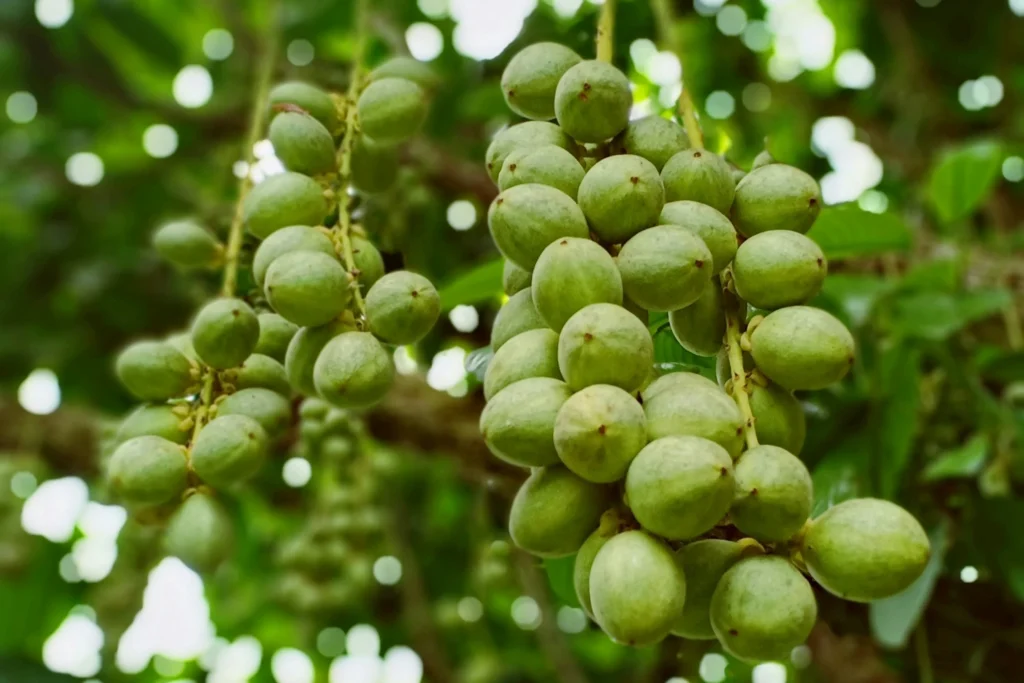
Shea butter is a natural fat extracted from shea nuts. The raw fat is totally plant-based and vegan – it’s actually edible too. Shea trees are native to several African countries, where they grow naturally and are also cultivated for commercial harvesting.
Once the fats have been extracted from the shea nuts, they can be left raw or refined. The raw product has a very strong nutty scent and can be difficult to work with. It will also have a yellow or greyish colour.
Most shea butter that’s available to buy as a moisturiser has been refined – there are several ways to refine the shea butter, as I found out when I chose my brand of shea butter to test out.
What I’m Using
After quite a bit of research, I settled on Alteya USDA Certified Organic Shea Butter. This shea butter is:
- Organic: grown without the use of harsh chemicals.
- Mechanically pressed: it was extracted from shea nuts using physical pressure (like squeezing) rather than chemical solvents. It’s kind of like cold-pressed olive oil.
- Physically refined: the shea butter was refined using physical processes rather than chemical treatments.
- Demucilaged: basically filtering and straining the butter to remove gummy parts and get a nicer texture.
- Bleached: yes, this can be done with chemicals… but when physically refined, that soft white colour can also be achieved by using earth filters or natural clay to remove impurities.
- Deodorized: shea butter can be deodorized through steam distillation to get rid of the strong nutty aroma.
This was the best option for me, as it has the workable texture and light scent that I want from a moisturiser while still being 100% pure and processed without artificial chemicals or solvents (as far as I can tell).
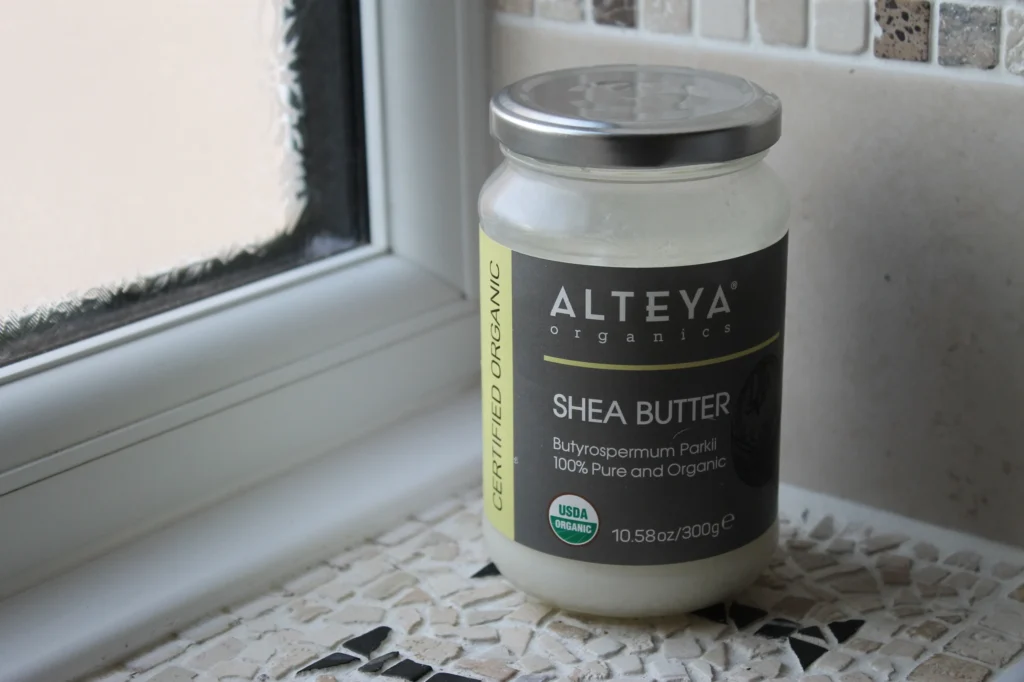
If you’re in the UK, there’s not a great deal of choice when you’re looking for where to buy shea butter. Jon and I traversed multiple Boots, Superdrug, and Holland & Barrett stores looking for a pure shea butter product – just one ingredient and nothing else, refined or otherwise. We couldn’t find anything.
Online, there is far more choice. You can find raw shea, scented shea, and even shea lotions. Alteya was a good choice for me because of their organic certification and moderate price. It’s certainly not a “cheap” moisturiser, but there’s no fillers in it whatsoever and the refinement process is purely physical, so I really feel that you get your money’s worth.
Finally, this organic shea butter comes in a glass jar rather than plastic packaging. It’s a nice touch (though a little tricky to open and close when your hands are coated in shea).
My Experience Using Pure Shea Butter Daily
I used the shea butter all over my body, focusing on my hands and feet when they felt extra dry. I also tried using it on my face a few times.
Texture and Application
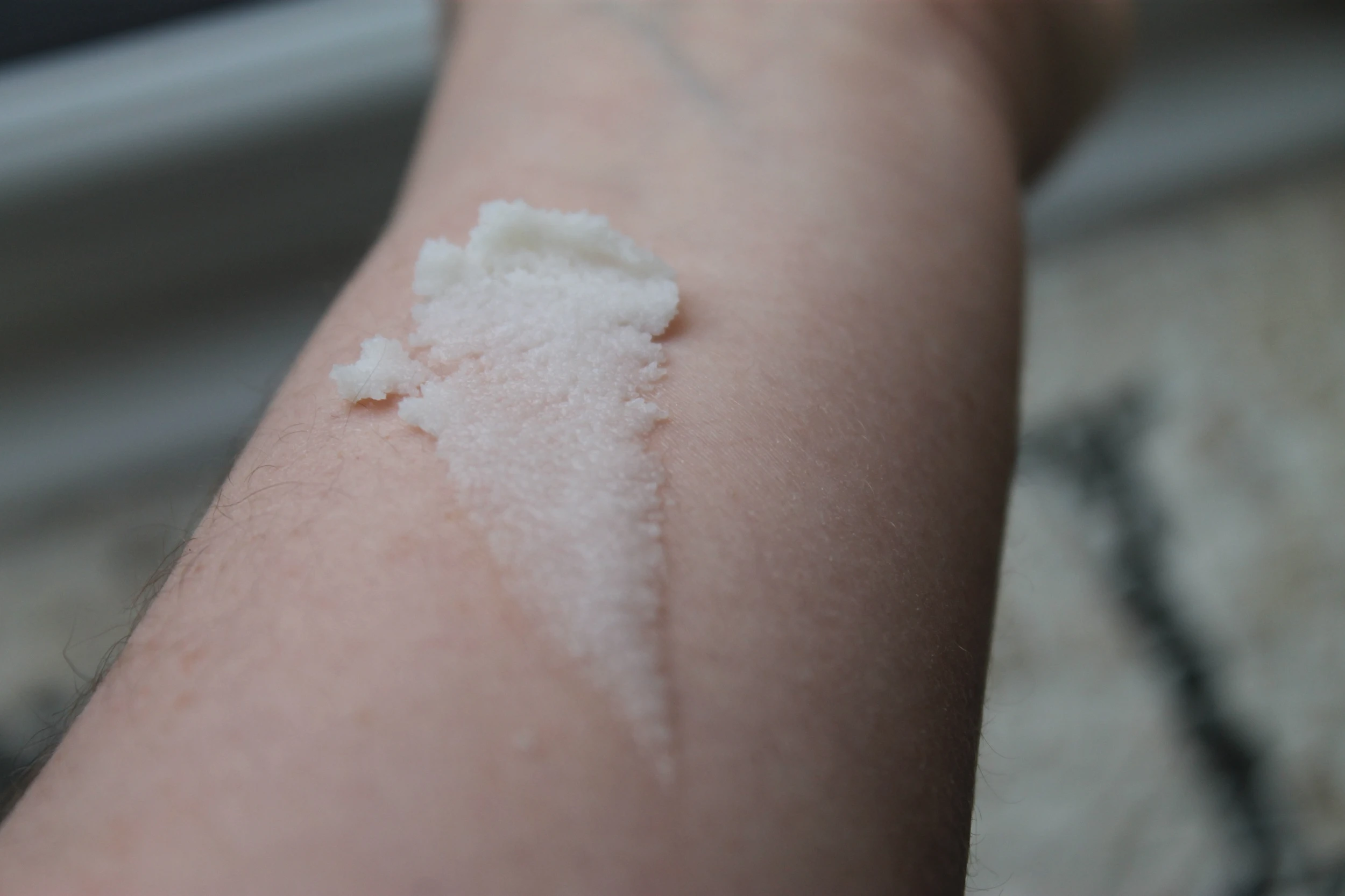
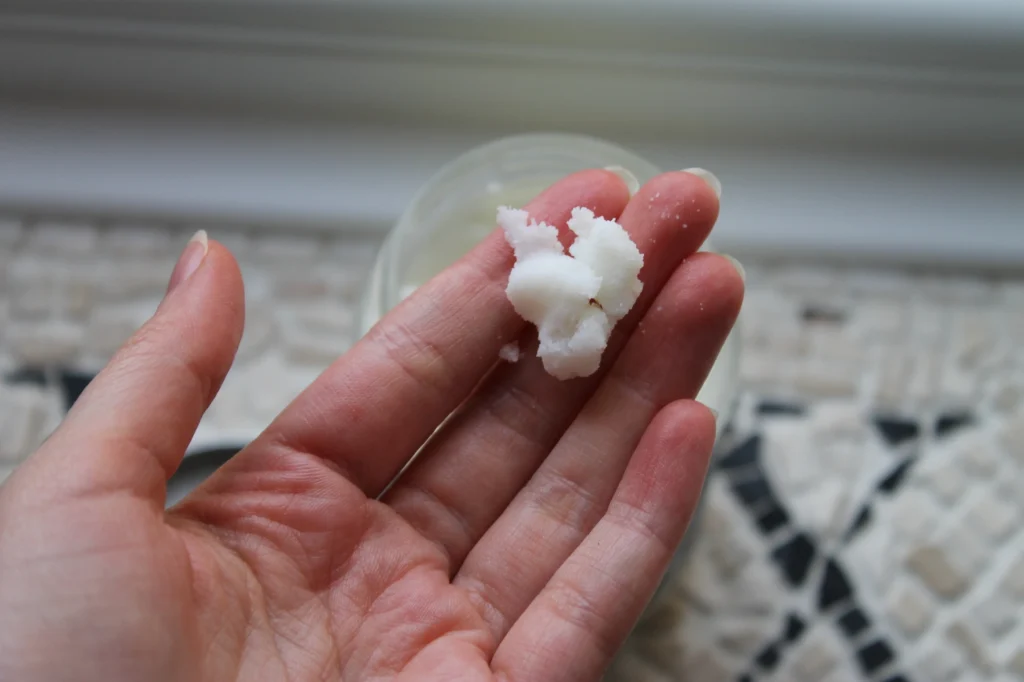
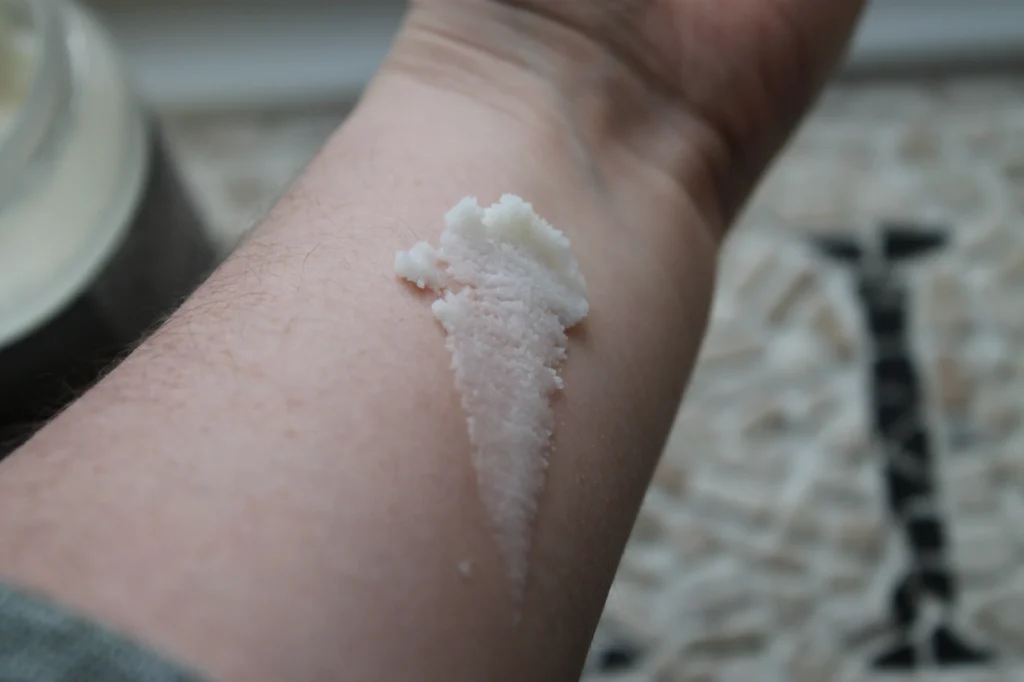
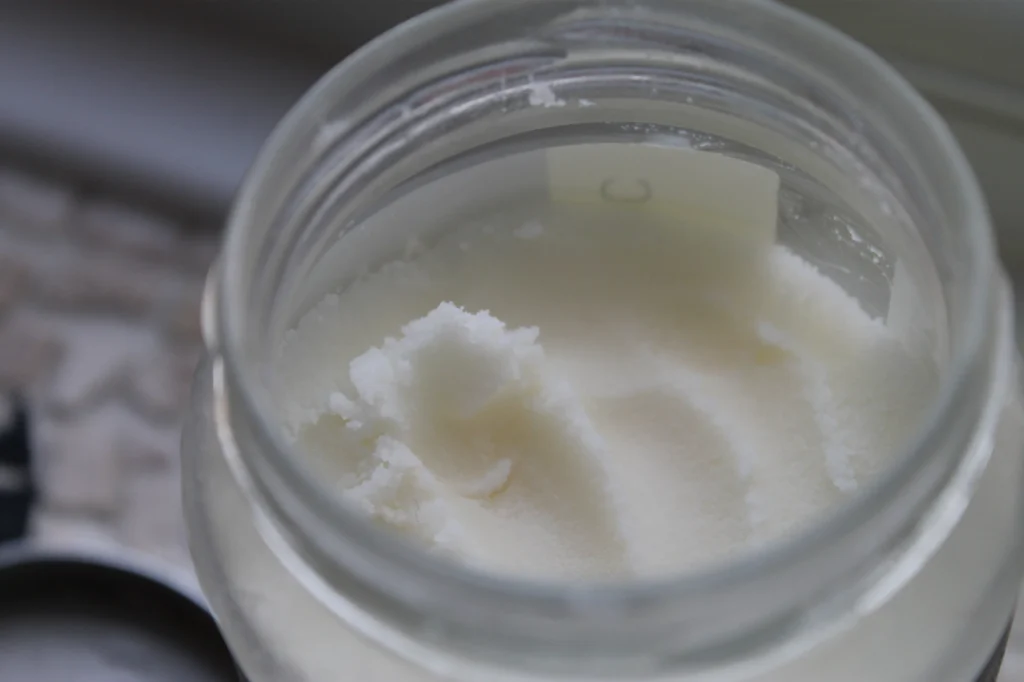
Despite the name, it’s not actually like butter. The texture is very thick and tough – somewhere between buttercream icing and modelling clay – with an almost gritty texture at room temperature.
It needs to be rubbed and massaged into your skin. As soon as it starts to warm up, it melts beautifully and glides over your skin with a little massaging motion. You can also rub a little between your hands to warm it up before applying.
I use roughly 1 to 2 tablespoons of my pure shea butter to cover my entire body, as it spreads really well once it’s warmed up with a massage.
Extra tips for application:
- Use a spoon or stick to get the shea butter out of the jar – it’s much easier than using your hands.
- Use just one hand to massage it in, so your other palm stays dry enough to close the jar afterwards.
- Try applying the shea butter after a shower or bath. Having warm skin makes the application so much easier.
Absorption Time
Pure shea butter takes a loooooong time to absorb. Conventional lotions are formulated to absorb quickly and are thinned to just the right texture. But even when refined, shea butter is thick and needs time to really sink in.
The slow absorption rate means you really don’t want to apply this moisturiser right before getting dressed or going to bed. Ideally, you need to lounge about for at least 30 minutes waiting for it to soak in before you get dressed or hop into bed.
If I moisturise in the evening, I typically find that my skin is still ever so slightly slick with the shea butter in the morning. It really does need significant time to sink in.
Immediate Feel and Finish
Once melted and massaged into your skin, the shea butter has a slightly slick and greasy feel. It’s not unpleasant but it is noticeable. Your skin will look slightly shiny too, but that fades quickly.
Almost immediately, I can feel areas of tough skin starting to soften. This is most noticeable on my feet.
After the shea butter has really sunk in, my skin feels supple and firm and deeply moisturised. Unlike thinner lotions, it really feels like the product has been absorbed rather than just sitting on top.
The longevity of the shea butter moisturisation is so impressive. With Nivea, E45 and other lotions, a quick shower or even just washing my hands is enough to totally undo any moisturising the product achieved – whether that’s just after application or even the next day.
But with the shea butter, even taking a long and hot bath after application doesn’t undo the soft, supple feeling of being moisturised.
To summarise the immediate effects:
- Feels slick and slightly greasy
- Takes hours to absorb
- Feels luxuriant and deeply moisturising
- Long-lasting moisturisation even after washing
Long-Term Results (After 3 Months)
Using shea butter moisturiser has really changed my skincare routine. It needs to be massaged into your skin, which is a process you can’t rush. You also need to plan when to apply it, so you don’t need to immediately put on clothes afterwards.
As a result, moisturising with shea butter feels like a self-care ritual. It’s something I’ll continue to do weekly or whenever my skin needs intense hydration, but it’s a bit too intensive for a daily moisturiser.
Here’s what I noted for my skin:
- Reduced appearance of pores and visibly dry skin. This has been the biggest and most permanent change. I don’t need to reapply daily to prevent my skin from drying – the moisturising and protective effects really are long term.
- Reduced redness. I tested the shea butter on one arm but left the other unmoisturised to test the effects. After exercise or a hot shower, the unmoisturised arm was much redder. I’ve noticed that in general, my skin doesn’t look inflamed or “raw” where it usually would before using shea.
- Improved skin texture. My skin felt smoother and more supple directly after moisturising.
- Hard skin has softened. I am an avid hiker, so the skin on my feet is incredibly tough. The shea butter has had a significant impact on making the skin smoother and more supple. My skin doesn’t crack any more and feels flexible, though it’s still very thick.
Skin concerns the shea butter has had no effect on:
- Ingrown hairs
- Chicken skin (keratosis pilaris)
- Strawberry skin
- General body acne
- Stretch marks
- Scars
Using shea butter for my skin throughout winter has been amazing. The butter is moisturising but also protective. Where cold winds would usually make my skin dry and itch, my skin has stayed soft and smooth to the touch – even if it has been days since I last used the shea butter.
I’m not sure whether using shea butter in the summer will have the same effect – I will likely reduce the frequency of use when it gets hot. The shea butter is very thick and, as someone who suffers in the heat, could feel too heavy and clogging when the humidity rises.
Pros and Cons: Is Pure Shea Butter Right for You?
Pros:
- Single ingredient without additives or preservatives
- Long-lasting moisturisation that survives washing
- Provides a protective barrier against cold weather
- Subtle scent and luxurious feel
Cons:
- Very slow absorption (30+ minutes minimum)
- Difficult to find in UK high-street stores
- Requires time and planning to apply properly
- Can feel too heavy in warm weather
Shea butter is ideal if you want an intense moisturiser for dry skin and is perfect for hands and feet, particularly in dry winter weather. It’s less suitable as an all-over moisturiser as it takes quite a while to apply and absorb.
As it needs to be really massaged in and leaves a thick, slightly greasy residue, I don’t recommend it for your face.
Where to Buy Pure Shea Butter in the UK
You’re unlikely to find pure shea butter on your high-street unless you have independent health or skincare stores. Even then, you’ll still need to research online to figure out how the brand is refining the product.
Where to buy shea butter online is easy. You can find many on Amazon, including:
- Alteya Organic Shea Butter: this is the one I have used and highly recommend.
- Motherland Organics Raw Shea Butter: an unrefined option that’s a little harder to apply.
- Fushi Organic Shea Butter: another unrefined and raw shea butter with a natural scent.
If you want the benefits of shea butter but want a nicer scent and texture, I recommend these natural options from Not On The High Street (supports small UK businesses):
- Shea and Mango Whipped Body Butter: shea butter, mango butter, essential oils and beeswax
- Lemon Whipped Body Butter: shea butter, cocoa butter, arrow root, rosehip and essential lemon oils
- Hand Balm with Shea Butter: scented with organic lavender and bergamot oils
FAQs
Yes, it is safe to use shea butter on your face, but due to the thick texture of pure shea butter, it may be too heavy for the delicate skin on your face.
Shea butter is not overly comedogenic, so it is unlikely to clog your pores. Order a sample and test a small amount of product to see if it feels good for you.
Yes, shea butter moisturises and protects your skin. It naturally contains vitamins A and E plus fatty acids. It is particularly good for very dry and tough skin.
Shea butter might help with some symptoms of eczema, as it deeply moisturises your skin and can reduce redness and inflammation.
Raw and unrefined shea butter has an intense nutty aroma. Refined shea butter is much more subtle. Both are gentle enough for sensitive skin. If sensitive skin isn’t a concern, you can scent shea butter with essential oils at home or buy scented shea butter.
Yes, shea butter is extracted from the nuts of the shea tree and is a plant-based product.
Raw shea butter has been extracted from the shea tree nuts, then packaged ready to be sold. It will have a strong nutty aroma, a yellow or grey colour, and could have an uneven texture with fibrous pieces. Refined shea butter has been processed either with chemicals (solvents) or physical processes (filtering, heating, etc.) to get a smooth, even texture and subtle scent that’s more preferable as a moisturiser.
Raw and unrefined shea butter can last up to 2 years if stored correctly (airtight container, away from direct sunlight).