
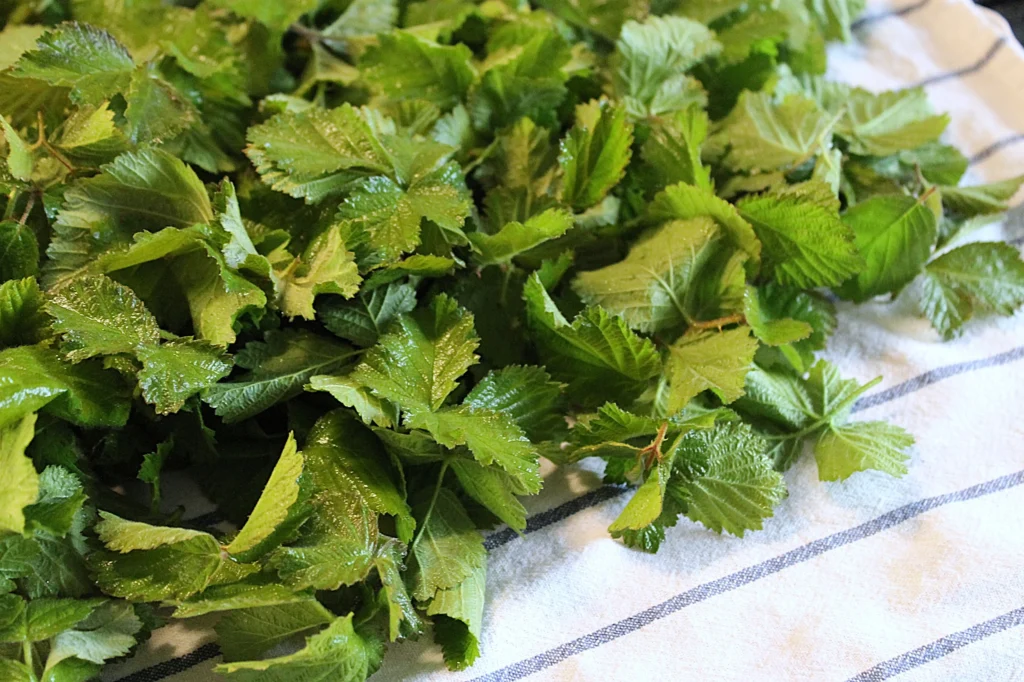
Did you know that you can forage the young leaves off wild blackberries and use them to make tea? It’s actually quite delicious!
It’s mid April and the brambles around where I live in Essex, UK have these soft young leaves just ready to be picked and processed into a nutritious and tasty beverage.
In this guide, I’ll take you through how to safely forage for blackberry leaves, how to make both fresh and fermented blackberry leaf tea, and their historical use in the UK to understand blackberry leaf tea benefits.
Guide to Foraging Blackberry Leaves
- Best Time: April
- Abundance: High
- Foraging Level: Easy (albeit prickly!)
- Uses: Medicinal tea, gargle, poultice
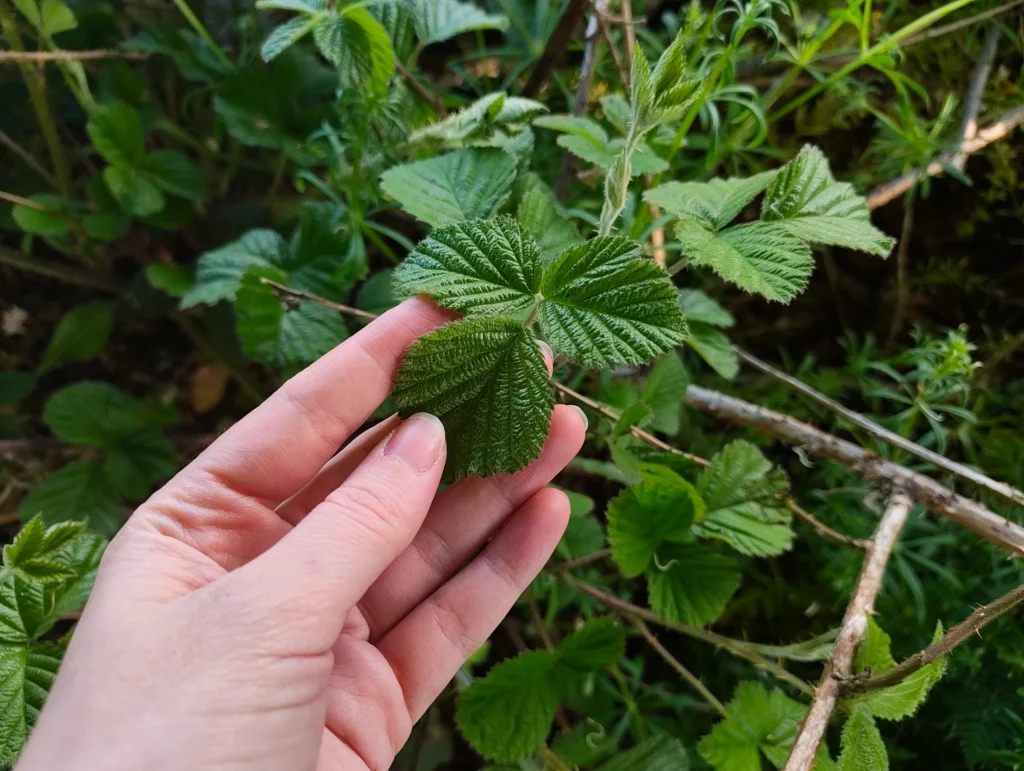
Brambles grow widespread across the UK and are easy to identify by their thorny stems, dark leaves, and berries that are ready to harvest in the Autumn.
The best time to harvest blackberry leaves for making tea is in the spring, way before they flower, when the leaves are fresh and new.
Try to avoid foraging by roadsides, particularly in high traffic areas, as well as by fields that you know are sprayed with pesticides and herbicides. Pick leaves that are at waist height or higher (especially important if you are foraging off a trail used by dog walkers).
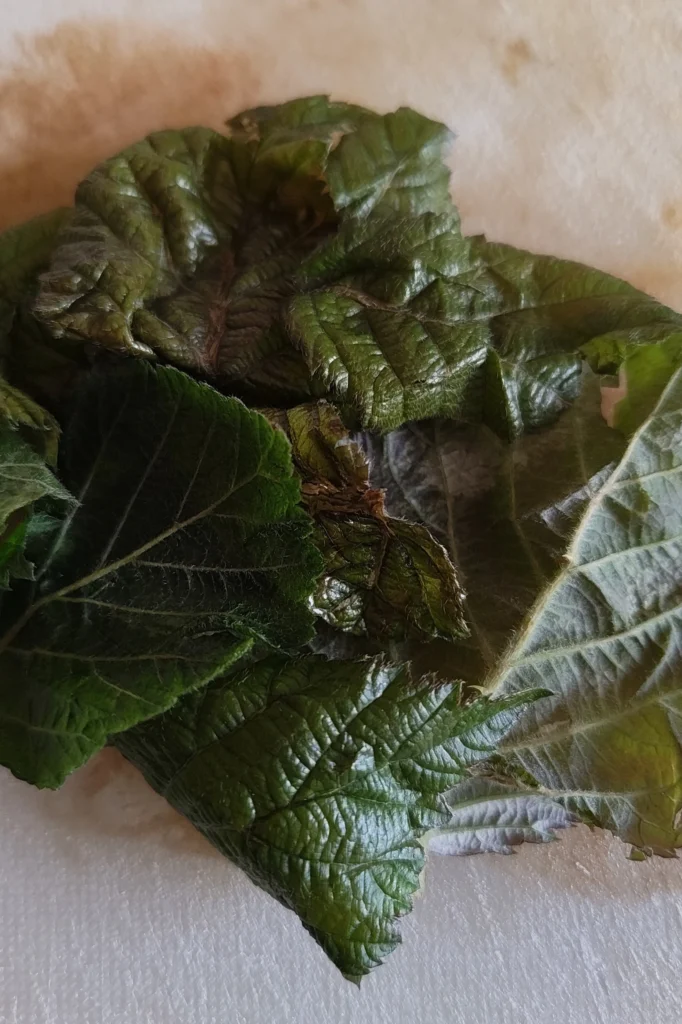
Look for brambles that have new growth and only pick leaves that are fully intact. Leave any that have small holes or tears on the plant.
💡 Responsible foraging tip: pick a few leaves off one bramble plant, then leave the rest and move on to another plant. Don’t strip the plant completely! Brambles tend to spread rapidly, so if you find one plant I bet there will be another just a few steps away.
Wear gloves to pluck the young leaves off the plant, or use scissors to snip them off close to the leaf.
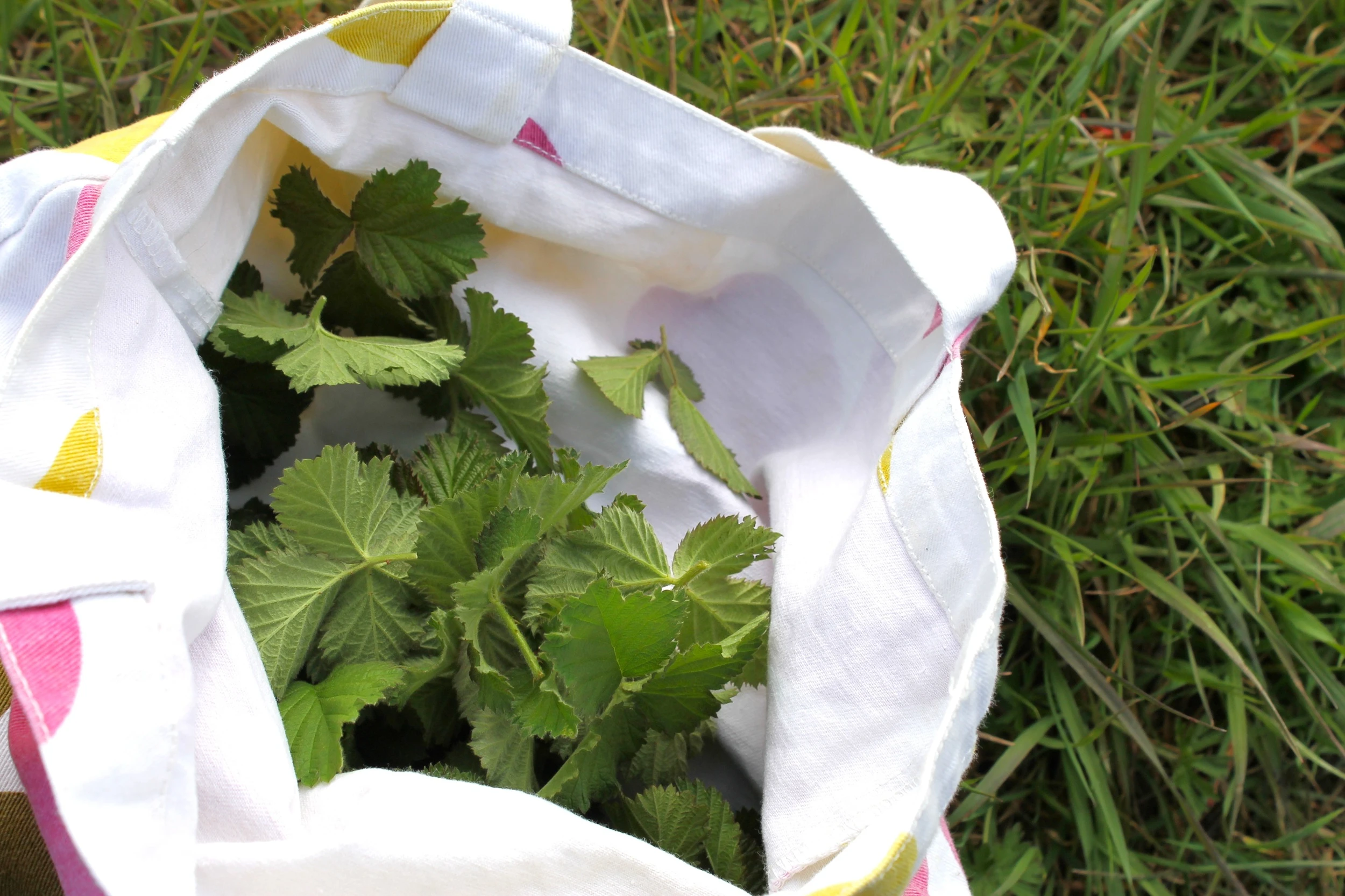
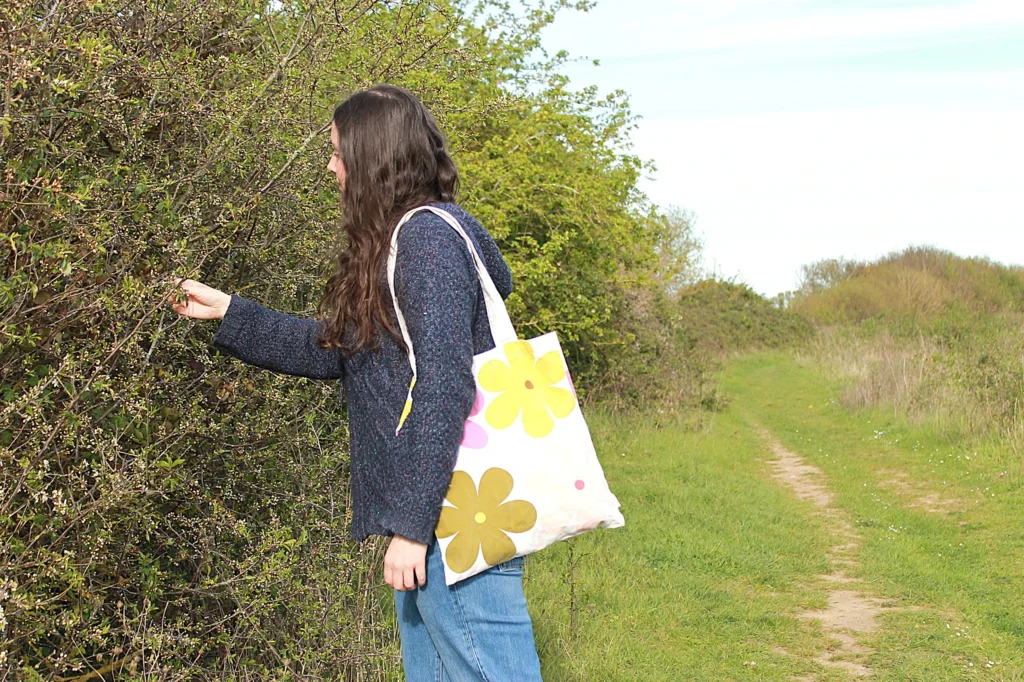
I gathered my leaves in a cotton tote bag but any carrier bag will do.
Use or dry the leaves immediately, or wash and store in the fridge for a few days.
Fresh Blackberry Leaf Tea Recipe
Serves 1 – 15 minutes
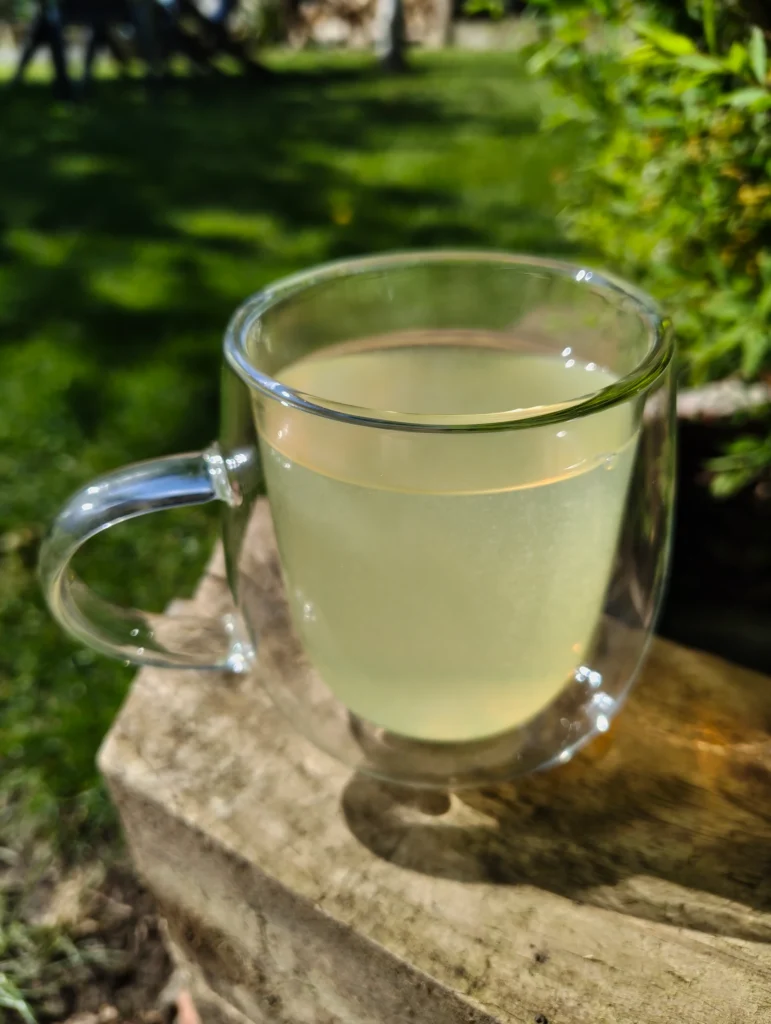
Fresh blackberry leaves have a green, grassy aroma that creates a bright and acidic-tasting tea. It reminds me of green tea, with a pale green shade and grass-like vegetal flavour. Blackberry leaves are full of tannins, so the longer you brew, the more tannic, acidic and drying the tea becomes. There’s almost a citrusy taste to the tea too, not unlike lemon balm.
This tea feels soothing and medicinal. Best enjoyed with a teaspoon of honey.
Learn more about the historical uses for blackberry leaf tea below.
Ingredients
- Handful of fresh blackberry leaves
- Fresh water, boiled
- Honey to taste
Method
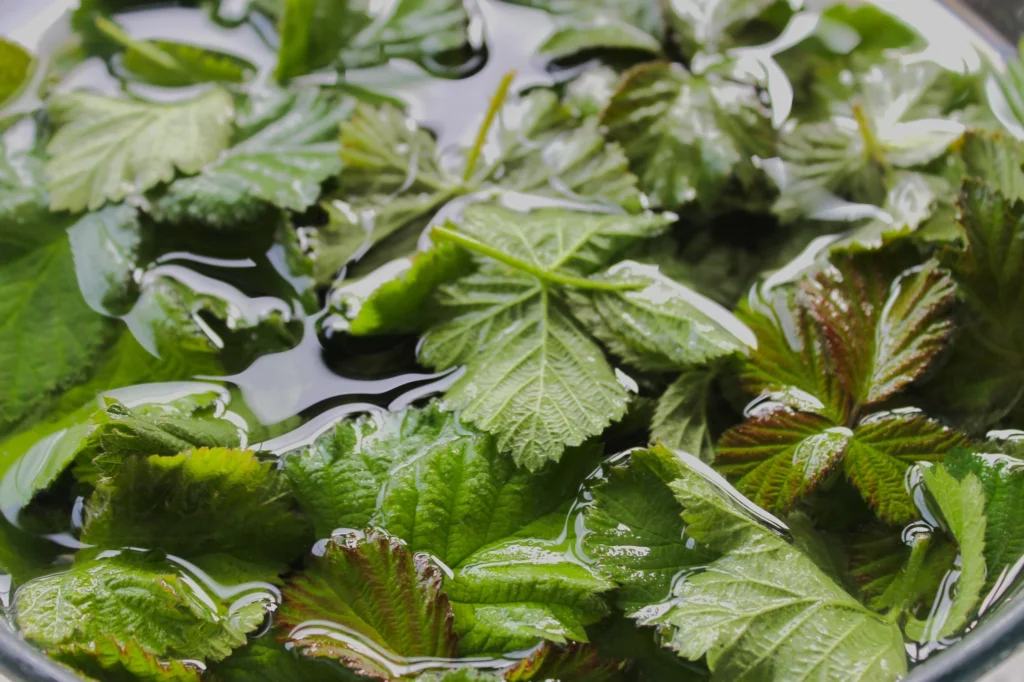
- Thoroughly wash your foraged blackberry leaves and keep an eye out for any bugs.
- Chop your blackberry leaves roughly, or scrunch them in your hands to bruise the leaves a little and release the oils. You can also let the leaves wilt for a few hours, but this is optional.
- Add approximately 2 tbsp of the chopped leaves to a tea infuser.
- Pour over freshly boiled water from the kettle (100°C) and pop a lid over it to trap in those natural oils.
- Brew for 5 minutes and take a sip, brew for an additional 5 minutes if you’d prefer a stronger flavour.
- Add a teaspoon of honey to taste.
How to Store Blackberry Leaves for Tea
If you have harvested a lot of blackberry leaves for making tea but don’t want to ferment them using the recipe below (highly recommended, by the way), then you can dry them instead.
- Wash and dry your blackberry leaves.
- Remove any stems that remained.
- Lay out the leaves flat on a baking sheet.
- Dry in the oven on the lowest heat setting (or just turn the fan on, if possible).
- They are done when they are brittle and crumble when touched.
- Store in a sterilised jam jar or airtight container in a dark place (cupboard is ideal).
To make tea with your dried blackberry leaves, just add 1 teaspoon of the dried leaves to a tea infuser and pour over boiling water. They will infuse much faster than the fresh leaves, so do a taste test after 2 to 3 minutes.
Dried blackberry leaves should keep for a long time, but their flavour will be best in the first few months or so.
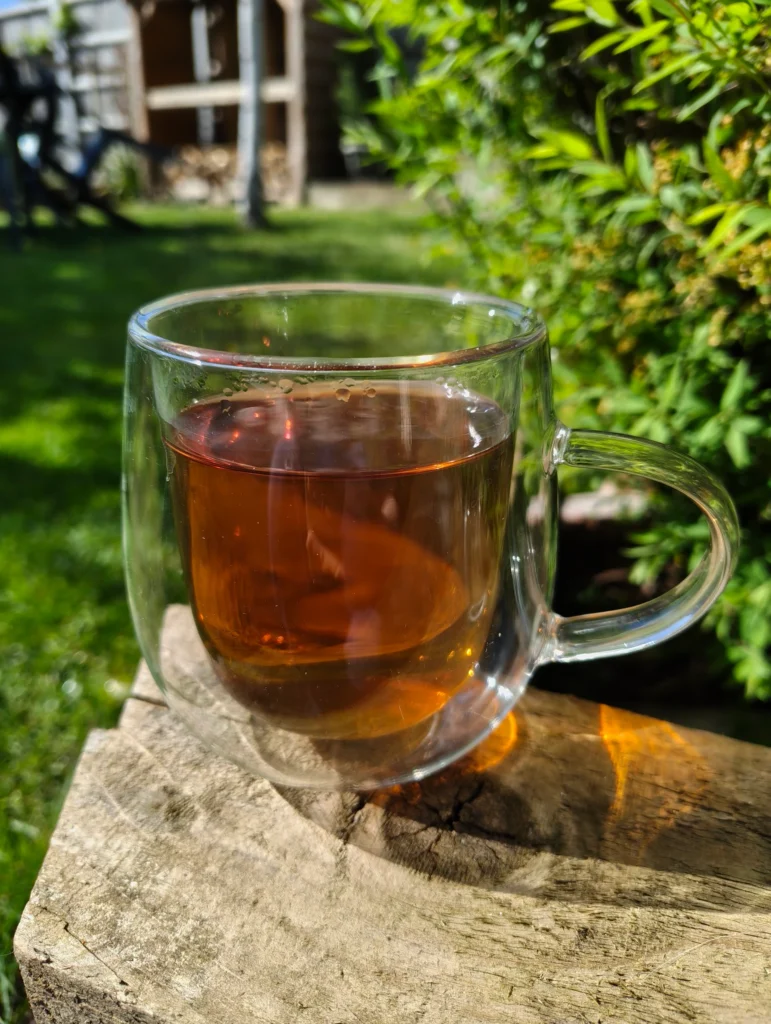
Fermented Blackberry Leaf Tea Recipe
Creates 1 Jar – 7+ days
By fermenting the blackberry leaves you have foraged, you transform the flavour from light and grassy to rich and almost fruity. Even from the early step of bruising the leaves, you’ll notice the aroma starts to get yummy!
This is why blackberry leaves are common ingredients in many commercial fruit teas. Unlike using actual fruit pieces, blackberry leaves (and hibiscus too) dry very well and last much longer once packed into teabags. If you regularly buy fruit teas from Twinings, Whittard or other UK stores, you have likely consumed blackberry leaf tea already. Twinings Blackcurrant and Blueberry Tea is a fine example.
Fermented blackberry leaves also better retain their medicinal benefits, which I will explore below.
Ingredients
- 1 carrier bag of blackberry leaves
- Water for washing
- Sterilised jam jars for fermenting and storing
Method
- Thoroughly wash your foraged blackberry leaves and keep an eye out for any bugs.
- Dry them thoroughly with clean tea towels or a salad spinner. It’s fine to leave them to dry for a few hours if they’re still damp.
- Remove any stems, so you’ve just got the leaves left.
- Bruise and bash the leaves. I pushed mine into a jug and used the end of a rolling pin to bash them, turning the leaves every so often so they were bruised evenly. You can also lay the leaves flat and roll the rolling pin firmly over them. When the leaves are darkened all over and their aroma changes from light and grassy to deep and fruity/floral, they are ready.
- Pack the leaves tightly into a sterilised jam jar. At this point, the entire carrier bag of fresh leaves should be compressed into a single jar. Firmly place on the lid.
- Label the jar and place it in a dark, warm cupboard.
- Check the jar daily to see if it has fermented. The leaves should go completely dark and the aroma should be rich and fruity when opened.
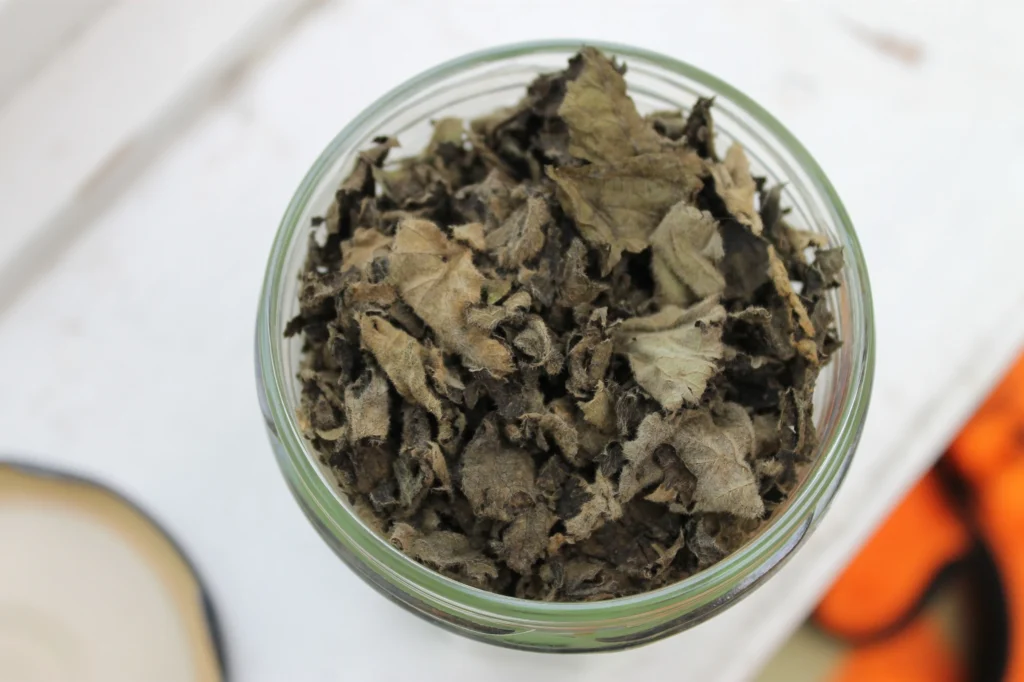
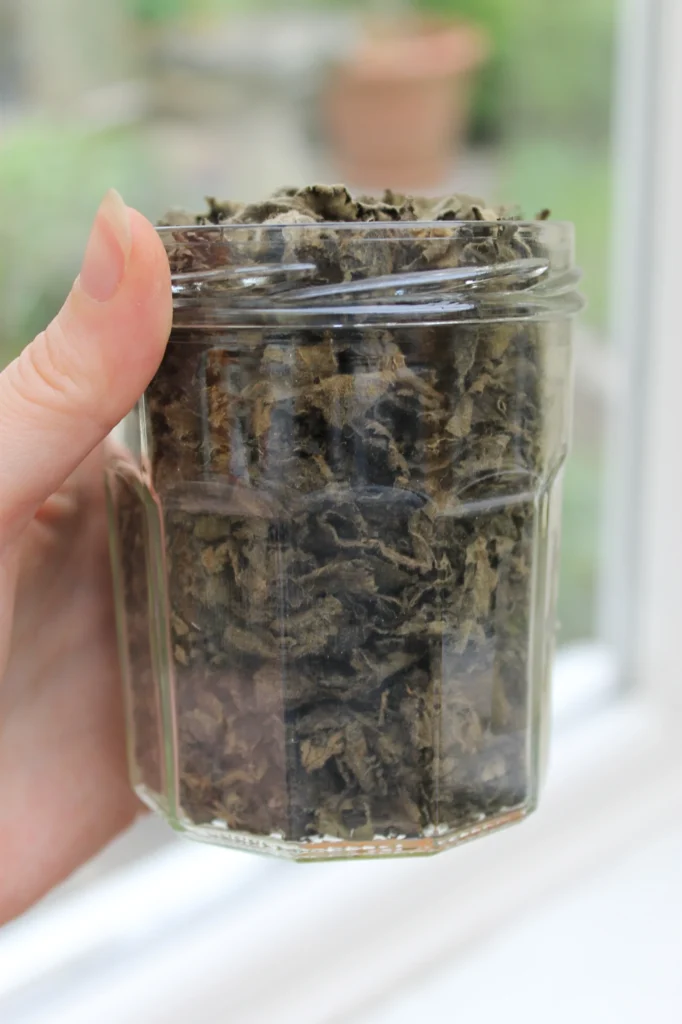
- Spread the fermented leaves onto a clean baking sheet in a single layer. Put your oven on the lowest setting (or just turn on the fan) and dry the leaves until they are brittle and crumble when touched.
- Transfer your dried leaves into a new sterilised jam jar and store in a dark cupboard.
Once your fermented leaves are dried and stored, you can make tea whenever you feel like it by using 1 teaspoon of blackberry leaves per cup.
Tips and Tricks for Fermenting Blackberry Leaves
I know fermenting sounds kind of scary, but it really needn’t be. Technically, this isn’t even true fermentation. And as blackberry leaves are free to forage in the UK, you really won’t have lost anything if it goes wrong. You can just pick some more and try again.
What is Fermentation?
Fermentation is when yeast or bacteria actively eat sugars to create other substances, like lactic acid or alcohol. This is how yoghurt, kimchi, and other fermented foods are made.
What’s happening to the blackberry leaves here is actually a kind of oxidation. The enzymes in the blackberry leaves are exposed when the cell walls are broken down (this happens when we bruise the leaves) and react with oxygen (this happens when they are stored in the jam jar).
This is the same process to make black tea leaves! Oxidation changes the flavour profile and darkens the colour of the leaves to create an entirely new beverage.
How Long Does Fermentation Take?
I researched this extensively online before starting the “fermentation” process. Every single guide I came across had a different time, ranging from 48 hours to several months.
Rather than relying on a set time, use your eyes and nose to check the leaves. It’s fine to open the jar daily to give it a quick sniff.
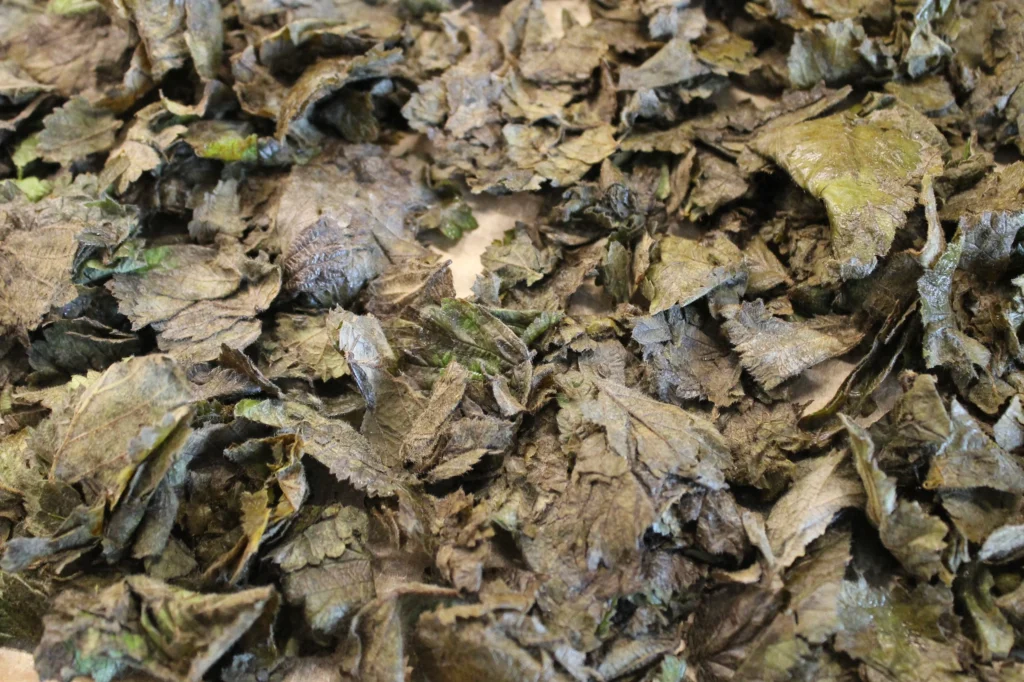
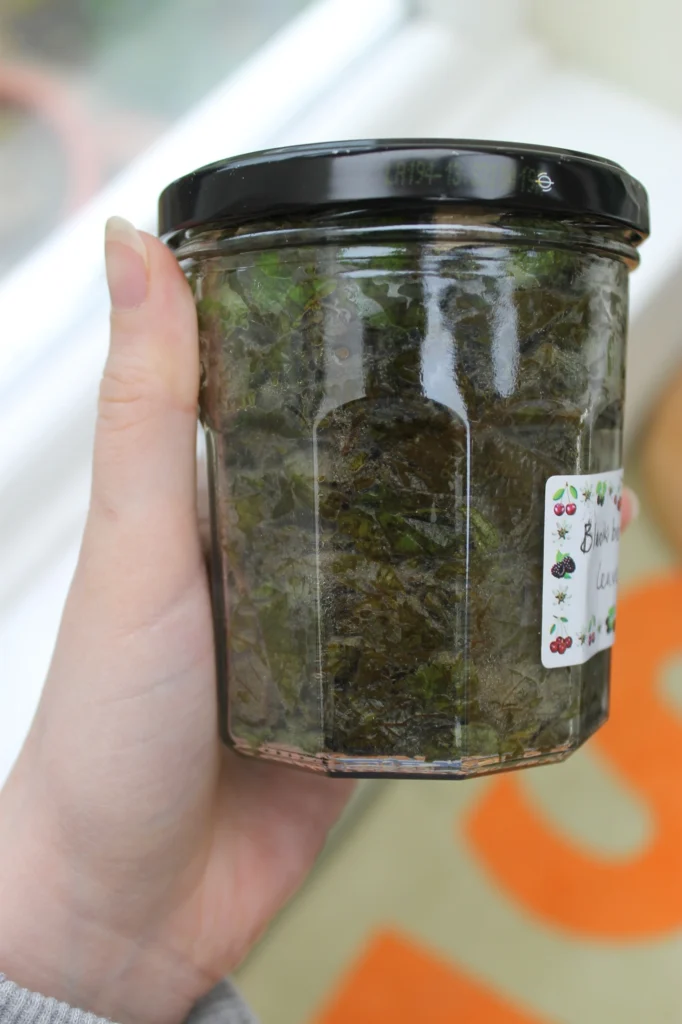
- Unfermented leaves: dark green and bruised, slightly fruity and floral aroma.
- Fermented leaves: dark in colour, rich and intensely fruity aroma, texture of the leaves still intact.
- Mouldy leaves (abandon): white spots or fur growing on the leaves or in the jar lid.
- Decomposed leaves (abandon): fully black, slimy texture, foul smell.
Everything from the size of the jar to the number of leaves to the room temperature and height above sea level can change how long the process takes. That’s why I’m not giving you a set time and instead encouraging you to use your senses.
How Do I Sterilise Jam Jars?
This is super easy. Here’s how I do it:
- Thoroughly clean your jam jar and lid with hot soapy water.
- Shake dry and place both the jar and lid on a baking tray.
- Place the tray inside your oven (turned off).
- Turn the oven on and set to 140°C, so the jars slowly come up to temperature.
- When the oven reaches temperature, set a timer for 20 minutes.
- Turn the oven off and let the jars slowly cool inside the oven for 5 minutes.
- Remove the jars and lids, being careful not to touch the inside of either (this can contaminate it).
Once the jars reach room temperature and sit there for too long, the air can contaminate them. So, it’s best to use the jars when they are still warm to the touch. If it has been too long, just repeat the process.
You can use any jar that you have saved, or buy some online. Get jars designed for food preservation and fermentation, so you can reuse them for other foraging projects.
What Were Blackberry Leaves Historically Used For?
Learning about how our native British ancestors used blackberry leaves is incredibly interesting. Historically, blackberry leaves were used medicinally rather than for culinary purposes – with such a strong grassy flavour, it’s easy to see why.
The blackberry leaves were made into tea or a gargle (something you swish around your mouth and throat without swallowing) to treat:
- Ulcers
- Gum disease
- Sore throat
- Aenemia
- Diarrhea and intestinal complaints
- Heavy menstrual flow and cramps
Blackberry leaves are a source of vitamin C and are rich in tannins (not unlike black tea) which makes the tea highly astringent. Modern research has also identified antioxidant, anti-inflammatory and antibacterial properties in blackberry leaves.
Blackberry leaves have also been used in British herbal tradition as a poultice or decoction to treat skin inflammation, however I haven’t found a decent recipe for this yet.
If you tried my recipes for blackberry leaf tea or have tips and tricks to share for foraging, leave a comment below!