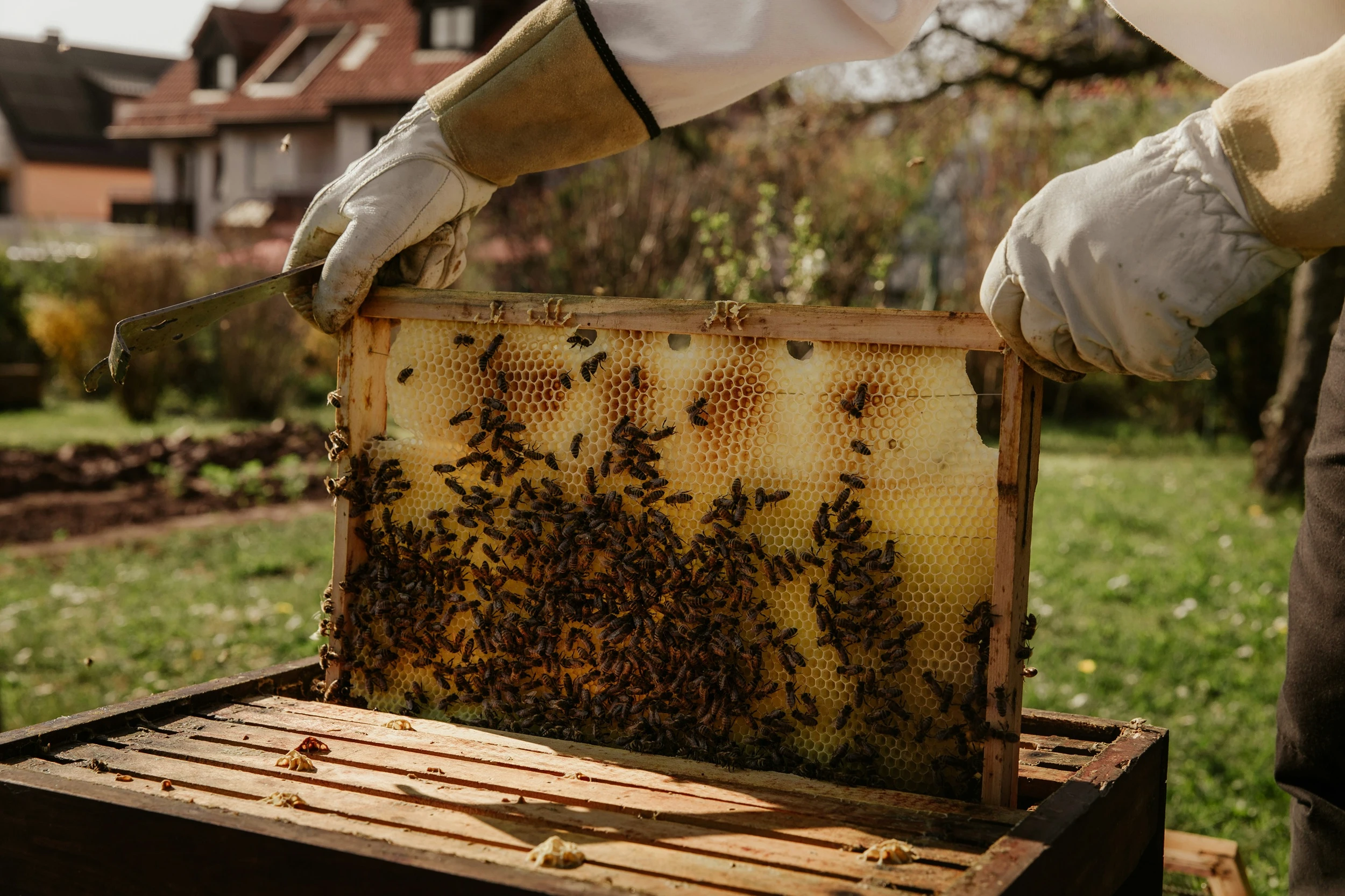

If you use social media, you may have encountered a company called Flow Hive selling ‘easy’ beehives with simple valves that open and produce honey from flow frames. For a layperson watching the ads, you’re presented with the idea you can have honey on tap.
The Flow Hive differs significantly to traditional bee extraction methods, and you may be wondering how real these supposed easy beehives are. Well, let’s explore how honey is made, and whether you can really install a hive in your back garden that gives you honey on tap.
How a Beehive Works
The best way to describe a beehive is a self-contained, bee feudal community. At the top of the pyramid sits the Queen Bee, and below her there are worker bees and drone bees.
There is a misconception that all bees other than the Queen Bee are male, in fact, a beehive is mostly female with very few male bees. Female worker bees collect pollen and make honey.
Male bees are drones and their primary goal is to congregate above their hive and wait for unfertilised queen bees from neighbouring hives to enter their ‘mating zone’.
How The Honey is Made
Worker bees will fly out and collect pollen from nearby flowers. Once collected the bee returns it to the hive. If a worker finds a particularly lucrative area for pollen such as a flower dense garden, she will signal to other worker bees the direction in which they should fly by positioning her body in the hive.
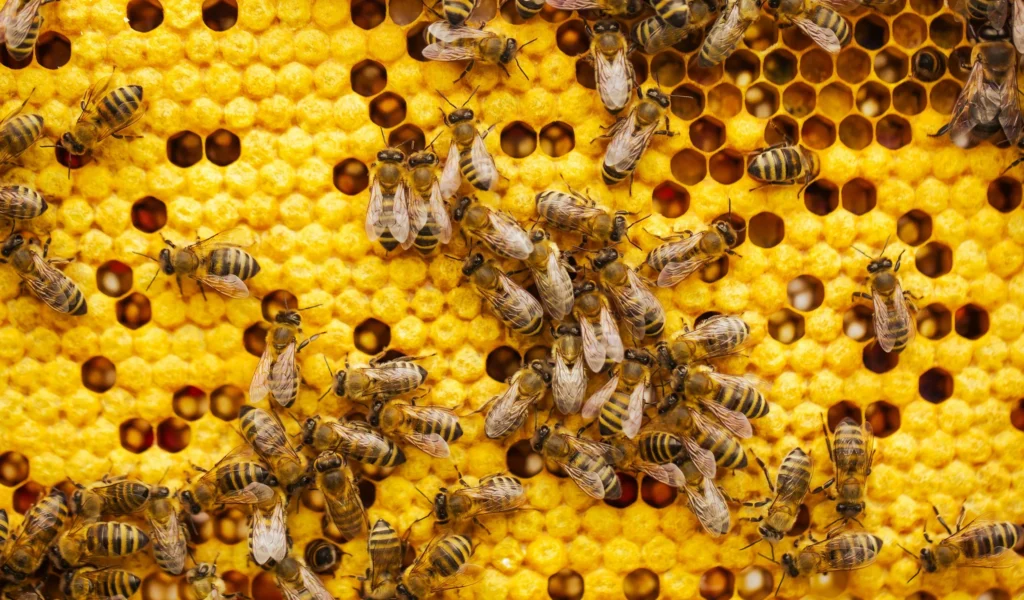
The process of getting the pollen into the hexagonal wax cell is a bit gross in human standards as the bees regurgitate the pollen in a chain until it becomes honey ready to be stored. You will find some sources online tone it down a little by saying the bees spit the pollen to one another, but in fact the bees rely on digestive enzymes in their stomach to convert the pollen into honey, so it is vomited to each other.
Once each hexagonal cell is filled with honey, a wax seal is placed over the cell, and the bees move onto the next cell to fill. In case you are wondering, wax is made by the bees as a bodily function, secreted from a wax gland. Moulding it into the hexagons however is done by the bees who bite and prod it into shape.
How Beekeeping Works
Responsible beekeeping requires a bit of dedicated effort and basic understanding – although it isn’t perhaps as intensive as some beekeepers would have you believe.
Domesticated hives generally mimic how hives behave in the wild. The difference is a beekeeper can influence how much the beehive grows by expanding out the hive and also increase honey production by removing old, degraded wax cells that would take bees a long time to dismantle.
It is critical to remember that honey is the food source for the bees, so being a responsible beekeeper means understanding the hives needs, leaving ample supply for the bees and removing only the disposable honey from the hive.
Knowing How Much Honey to Remove from a Hive
Removing too much honey from the hive may well be survivable for the hive, but it will survive under undue stress if it does survive.
A good beekeeper leaves enough honey for the hive to thrive and the bees to not be working under perpetual stress – this is a very hard balance to strike, and the tendency is for most beekeepers to remove more honey than they should, reducing the happiness of the hive and also impacting the quality of the honey.
In short, good honey comes from a well-functioning happy beehive.
Flow Hive Scam? Are Flow Frames a Con?
With all this said, can you really become a DIY beekeeper without the work outlined above? Can you meaningfully keep a happy hive if you’re removing all honey on tap?
It is important to say that Flow Hive is not a scam company however the marketing is untrustworthy at best. Essentially, they produce hives with plastic flow frames that have a plastic tap at the bottom to produce honey on tap. The equipment is marketed at people who want to produce honey with minimal effort.
Are Flow Hives and Flow Frames Bad?
Using the Navigation Codex, Flow Hives are extremely resistant ways to look after bees and collect honey.
- They introduce plastics to beehives that are obviously not found in nature.
- The plastic frames reduce the amount of wax bees use in the hives and beeswax itself has natural benefits in honey production.
- The honey quality is not as good as more natural beehives.
Flow Hives also typically appeal to inexperienced beekeepers who want ‘ease of use’. The design of flow frames makes it more difficult to inspect the health of the hive.
A healthy hive of course produces better honey.
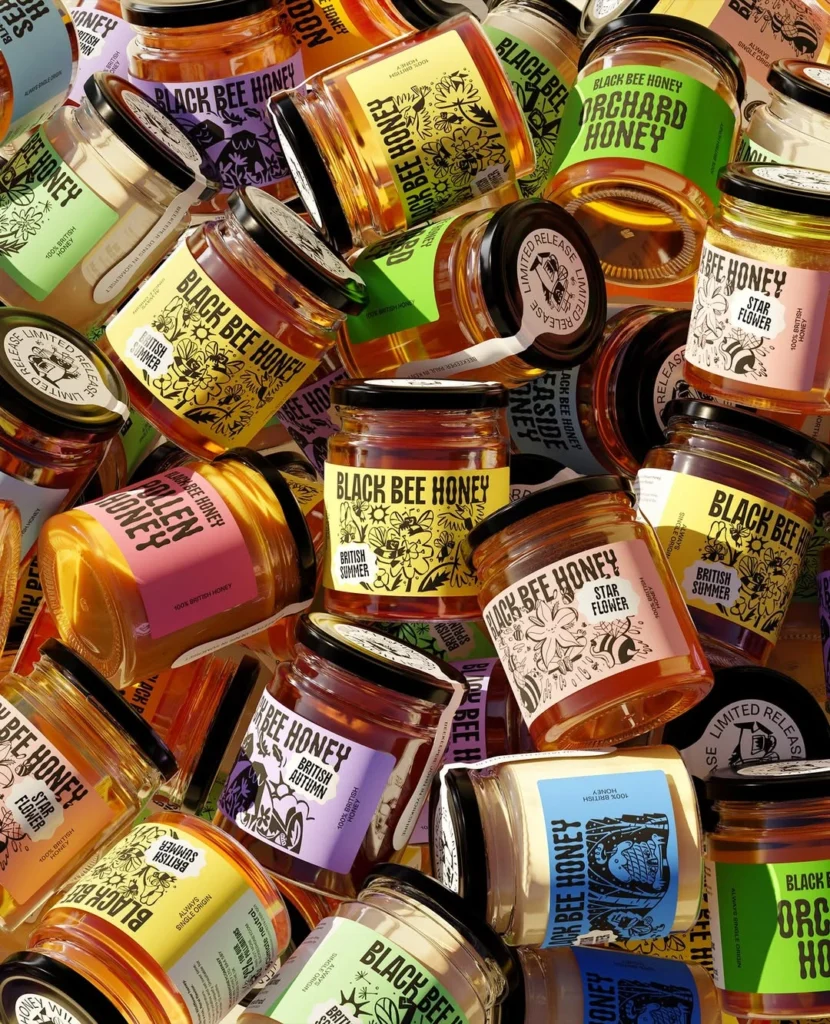
If you’d like to try real honey that’s made traditionally and tastes amazing, check out Black Bee Honey. They’re B Corp certified and only sell 100% British, single origin honey.
What about the Cost of Flow Hives and Flow Frames?
This is a critical point about Flow Hives; they are far more expensive than purchasing a traditional wooden beehive. This means experienced beekeepers who wish to produce high quality honey and look after their hives are not likely to use flow hives, because they are cost prohibitive when you have expertise.
For inexperienced beekeepers looking for a quick fix solution to keeping bees, Flow Hives are cost effective when valued against their lack of experience.
Actual Beekeeping Scams
Flow Hive as a company is a social media marketing powerhouse, and they often send materials to influencers to promote the product and ease of use further.
Unfortunately for Flow Hive, outside of their direct control, some influencers are creating fraudulent adverts or even scamming their followers.
Beekeeping scams are now very prevalent in the beekeeping community– which sounds a little unlikely because why would criminals bother – but the amount of money and lack of criminal accountability make it very attractive.
It is likely to be a scam if:
- A seller is offering to mail, or parcel deliver a nucleus hive. It is extremely uncommon and unsafe to ship bees in such a way and any seller doing so is almost certainly less than reputable.
- Scammers in general use payment methods like Zelle, Venmo or PayPal ‘Family and Friends’ to avoid the risk of refunds. Although uncommon in beekeeping scams, cryptocurrency payment would be a red flag as again these transactions are non-returnable.
- Fake beekeeping profiles often bootleg images, reels and marketing materials from Flow Hive. This is because they want to cast their net wide, appealing to the same inexperienced customer base as Flow Hive legitimately taps into.
- Scammers offer Flow Hive equipment at prices far too low to be true, so always check Flow Hive directly if you wish to make a purchase to see what type of prices to expect before shopping around if you don’t want to purchase direct.
I Want To Keep Bees – Is There a Right Way to Do It?
There are nuances to beekeeping depending on your location in the world. Some areas have year round nectar cycles like Australia while here in the UK, nectar is seasonal and winter months are inactive months for bees.
In the UK there is a wonderful charity called the British Beekeepers Association that has a wealth of resources and toolkits to help beekeepers of all levels of experience. Including amateurs looking to learn the ropes and establish their first hives.
The charity has local branches with community support and education available to almost any locale in the British Isles.